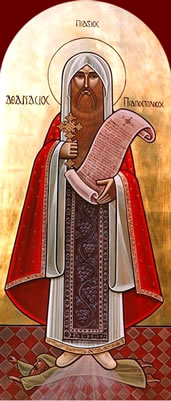
Tome 4 Against Nestorius (CPG 5217)
| Reference: | CPG 5217 |
| Incipit: | Ὁ θεσπέσιος Παῦλος οὐκ ἀσυντελῆ πρὸς ὄνησιν |
| Date: | Spring 430 |
| Greek Text: | ACO 1.1.6:75-91. |
| English Translations: | P.E. Pusey. pp. 125-154, adapted by A. Claflin; see also the translation of Russell, pp. 167-174, for par. 27b-33 and 41-49. |
Cyril refers to Nestorius sometimes in second person, sometimes in third person. Usually the referent is clear from context, but clarification has been added in some cases when a sudden change in person is unclear. Any direct quotes from Nestorius’ works are in italics.
Theotokos and related words are transliterated and italicized. This title of Mary is a main point of contention for Nestorius and is addressed mainly in Tome 1. The main topic of the Tomes is the union of natures in Christ, which Cyril defines as a union κατὰ ὑπόστασις and accuses Nestorius of thinking of it as a συνάφεια. Ὑπόστασις has been translated as ‘subsistence,’ by which Cyril means a being which subsists in itself. He uses ὑπόστασις interchangeably with πρόσωπον (person). Cyril writes that the union results in one ὑπόστασις in Christ. He accuses Nestorius of teaching a συνάφεια, which has been translated ‘connection.’ This word implies two different beings side-by-side, moving in synchrony but nevertheless distinct. This is Cyril’s main argument against Nestorius, that he teaches not one but two Christs, one man and one divine.
For more information on the Five Tomes, click here.
Contents:
1. Introduction – Christ in the Bronze Serpent (1–2)
2. First Argument – Nestorius Divides the Works of the Trinity (3–18)
3. Second Argument – Nestorius Himself Condemns Division of the Trinity (19–27)
4. Third Argument – Nestorius Divides Christ’s Divinity and Humanity in Communion (28–49)
BOOK 4
1. Introduction – Christ in the Bronze Serpent
| Ὁ θεσπέσιος Παῦλος οὐκ ἀσυντελῆ πρὸς ὄνησιν τοῖς εὐσεβεῖν ᾑρημένοις τὴν ἔν γε τῷ νόμῷ σκιὰν ἀποφαίνων καὶ μὴν καὶ τὰ πάλαι τοῖς ἀρχαίοις συμβεβηκότα καθάπερ τινὰ πίνακα καὶ γραφὴν τῶν ἀληθεστέρων ταῖς ἁπάντων διανοίαις εὖ μάλα παρατιθεὶς “ταῦτα δέ,” φησί, “τυπικῶς συνέβαινεν ἐκείνοις, ἐγράφη δὲ πρὸς νουθεσίαν ἡμῶν, εἰς οὓς τὰ τέλη τῶν αἰώνων κατήντηκε.” φέρε δὴ οὖν ἐκ νομικῶν γραμμάτων ἑλόντες λέγωμεν ὡς κατηυλίζοντο μὲν ἐν ἐρήμῷ ποτὲ τῆς Αἰγυπτίων ἀπαίροντες οἱ ἐξ Ἰσραὴλ καὶ εἰς τὴν τῆς ἐπαγγελίας διασπεύδοντες γῆν· ἐπειδὴ δὲ τῶν ἐν Αἰγύπτῷ θαυμάτων ἀμνημονοῦντες οἱ τάλανες καὶ τῆς εἰς θεὸν ἀγάπης ἀμνημονήσαντες διεγόγγυζον ἀνοσίως, “ὑπὸ τῶν ὄφεων ἀπώλλυντο” κατὰ τὸ γεγραμμένον. διέδρων γε μὴν τὰ τῶν ἰοβόλων δήγματα, τὸν ὄφιν αὐτοῖς τὸν χαλκοῦν ἀναστηλώσαντος τοῦ Μωσέως, τοῦ πάντων σωτῆρος θεοῦ κεχρησμῷδηκότος· “ποίησον σαυτῷ ὄφιν καὶ θὲς αὐτὸν ἐπὶ σημείου, καὶ ἔσται ἐὰν δάκῃ ὄφις ἄνθρωπον, πᾶς ὁ δεδηγμένος ἰδὼν αὐτὸν ζήσεται.” μυστήριον δὲ ἄρα τὸ κατὰ Χριστὸν ἡ τύπωσις ἦν. θεὸς γὰρ ὑπάρχων ὁ μονογενὴς τοῦ θεοῦ λόγος καὶ ἐξ ἀγαθοῦ πατρὸς ἀγαθὸς κατὰ φύσιν, μετέσχεν αἵματος καὶ σαρκός, τουτέστι γέγονεν ἄνθρωπος ἡμῖν τε τοῖς πονηροῖς παραπλήσιος κατά γε τὸ εἶναι καθ’ ἡμᾶς ἄνθρωπος δηλονότι, τέθειται δὲ καὶ ἐφ’ ὑψηλοῦ, τουτέστι σταυρὸν ἀνέτλη τὸν ἐπὶ ξύλου καὶ τὸν κατὰ σάρκα θάνατον, εἰ καὶ ἀνεβίω τριήμερος, τὸ τοῦ θανάτου πατήσας κράτος. | 1. Paul, speaking by divine inspiration, has shown that the shadow of the law is not unprofitable for those who have chosen to live piously. He has set before the minds of everyone the things that happened to those long ago as a picture and representation of what is truer. He says, “But these things happened to them as examples, but were written as warnings for us, to whom the ends of the world have come” [1 Cor. 10:11]. Come now, therefore, and selecting from the writings of the law let us say that the Israelites were camping in the desert when they departed out of the land of the Egyptians and were hastening toward the land of promise. But wretchedly, when they became unmindful of the wonders in Egypt and of their love for God and began impiously to grumble, “they were killed by serpents” [1 Cor. 10:9], as it is written. Yet they escaped the bites of the venomous creatures, for Moses raised up for them the bronze serpent as God the Savior of all had commanded: “Make for yourself a serpent and set it as a sign. If a serpent has bitten a man, everyone who is bitten and looks at it shall live” [Num. 21:8]. The figure then was the mystery concerning Christ. For the only-begotten Word of God, being God and good by nature from a good Father, partook of flesh and blood; that is, he became man like we who are wicked, by which I mean that he is man as we are. And he has been set on high too, enduring the cross on the wood and death according to the flesh, even though he rose again on the third day, having trampled on the might of death. |
| ὅταν τοίνυν ἐκ πολλῆς ἄγαν ἀσυνεσίας τῆς μετὰ σαρκὸς οἰκονομίας καταγογγύζοντες καὶ τὸ ἀκαλλὲς αὐτῆς καθορίζοντες αἰσχυνώμεθα φρονεῖν ἢ λέγειν ἄνθρωπον γενέσθαι καθ’ ἡμᾶς τὸν τοῦ θεοῦ λόγον καὶ ἑνωθῆναι σαρκὶ κατὰ ἀλήθειαν, τότε καὶ δράκων ἡμᾶς ὁ ἀρχέκακος ἀποκτενεῖ, τῆς ἑαυτοῦ δυστροπίας ἰὸν ὥσπερ τινὰ ταῖς ἡμετέραις διανοίαις ἐνιεὶς τὴν πλάνησιν, διαφευξόμεθα δὲ καὶ τὰ τῆς ἐκείνου σκαιότητος διακρουσόμεθα βλάβη, τοῖς τῆς καρδίας ὄμμασιν ἐνορῶντες τῷ ὄφει, τουτέστι τὸ Χριστοῦ μυστήριον ἀκριβεῖ διανοίαι κατασκεπτόμενοι. τότε γὰρ τότε φρονοῦντες ὀρθὰ ἀνενδοιάστως ὁμολογήσομεν ὅτι γέγονε σὰρξ ὁ τοῦ θεοῦ λόγος καὶ προῆλθεν ἐκ γυναικὸς μετὰ τοῦ μεῖναι θεὸς καί ἐστιν ὁ αὐτὸς θεός τε ὁμοῦ καὶ ἄνθρωπος, οὔτε τοῖς τῆς ἀνθρωπότητος μέτροις ἐπερυθριῶν διά γε τὸ τῆς ὑπεροχῆς ἀξίωμα οὔτε μὴν τῆς θεοπρεποῦς ἐξουσίας καὶ ὑπερτάτης εὐκλείας ἐστερημένος διὰ τὸ ἀνθρώπινον. οἱ δὲ δὴ τὰ τοιάδε διακρίνειν εὖ μάλα κατειθισμένοι δι’ ἀμφοῖν τὸν ἕνα καὶ τὸ ἐπ’ αὐτῷ μυστήριον ἰσχνῶς καὶ ἐξητασμένως συνιέντες λέγουσιν· “ὢ βάθος πλούτου καὶ σοφίας καὶ γνώσεως θεοῦ, ὡς ἀνεξερεύνητα τὰ κρίματα αὐτοῦ καὶ ἀνεξιχνίαστοι αἱ ὁδοὶ αὐτοῦ. τίς γὰρ ἔγνω νοῦν κυρίου;” | 2. Therefore, when, due to an exceedingly great lack of understanding, we grumble against the economy with flesh and accuse it of indecency, ashamed to think or say that the Word of God became man as we are and was truly united to flesh, then the dragon, the prince of evil, will slay us and infuse error into our minds as if it were the venom of his own perversity. But we shall yet escape and repel the damage of his crookedness if with the eyes of our heart we look on the serpent, that is, if we consider with sound mind the mystery of Christ. For then we shall deem it right to confess without hesitation that the Word of God has been made flesh and proceeded forth from a woman while remaining God. He is simultaneously God and man, neither shaming the measures of the human nature on account of his worthy superiority, nor devoid of his God-befitting authority and supreme glory on account of the human nature. Those who discern such things clearly and by accurate scrutiny understand the one through both, the mystery about him, and say, “O the depth of the riches and wisdom and knowledge of God! How unsearchable his judgements and his ways beyond tracking. For who has known the mind of the Lord?” [Rom. 11:33–34]. |
2. First Argument – Nestorius Divides the Works of the Trinity
| ἀλλ’ οὐκ οἶδ’ ὅπως ὡς ἀνέφικτά τε καὶ ἀκαλλῆ ταυτὶ διωθούμενος, τῆς τοῦ σωτῆρος ἡμῶν εὐκλείας καὶ ὑπεροχῆς οὐ μετρίαν οὑτοσὶ ποιεῖσθαι κατατολμᾶι τὴν κατάρρησιν καὶ μέτρον ὥσπερ αὐτῷ τὸ καθ’ ἡμᾶς ἀπονέμων καὶ ἕτερον οὐδὲν δεδοξάσθαι φησὶν αὐτὸν παρὰ τοῦ ἁγίου πνεύματος, οὐχ ὡς ἰδίαι δυνάμει χρώμενον τῇ δι’ αὐτοῦ καὶ πληροῦντα τὰς θεοσημίας, ἀλλ’ ἔξωθεν καὶ εἰσκεκριμένως κερδαίνοντα τὸ κατορθοῦν δύνασθαί τι τῶν τεθαυμασμένων, ἵνα δὴ φαίνοιτο καθ’ ἡμᾶς ἰαμάτων που τάχα χάρισμα λαβὼν φάναι τε ὀφείλων κατὰ τὸν μακάριον Παῦλον· “χάριτι δὲ θεοῦ εἰμὶ ὃ εἰμί.” οἷς γὰρ ἐπακτὸν καὶ θύραθεν τὸ εἶναί τι καὶ δύνασθαι κατορθοῦν, οὗτοι φαῖεν ἂν εἰκότως καὶ τὴν τοιάνδε φωνήν. | 3. Yet somehow this man throws these things away as impossible and indecent, daring to make no small accusation against the glory and excellence of our Savior, allotting to him our measure and nothing else. He says that [Christ] has been glorified by the Holy Spirit, not as one using his own power through him to work signs but as one to whom the power of working miracles introduced from the outside. In this way he appears like us, happening to be the recipient of a gift of healing and bound to say with blessed Paul, “By the grace of God I am what I am” [1 Cor. 12:9]. For whoever has this power imported from outside will rightly say such words. |
| δεῖξαι γάρ, ὡς οἴεται, βουληθεὶς ἰσουργὸν εἰς ἅπαντα τὴν ἁγίαν τριάδα, πάλιν ὧδέ φησιν Ὁ θεὸς λόγος ἐγένετο σὰρξ καὶ ἐσκήνωσεν ἐν ἡμῖν. συνεκάθισεν ἑαυτῷ τὴν ἀναληφθεῖσαν ὁ πατὴρ ἀνθρωπότητα· εἶπε γάρ φησιν, “ὁ κύριος τῷ κυρίῷ μου· κάθου ἐκ δεξιῶν μου.” τὴν τοῦ ἀναληφθέντος τὸ πνεῦμα κατελθὸν συνεκρότησε δόξαν· ὅταν γάρ φησιν, “ἔλθῃ τὸ πνεῦμα τῆς ἀληθείας, ἐκεῖνος ἐμὲ δοξάσει.” βούλει καὶ ἄλλην ἐπὶ τούτοις αὐτοῖς τῆς τριάδος ἐνέργειαν; ἐνῴκησεν ὁ υἱὸς ἐν τῷ σώματι, συνέστησεν ὁ πατὴρ βαπτιζόμενον, διέπλασεν ἐν παρθένῷ τὸ πνεῦμα. Εἶτα πάλιν φησὶ περὶ τῶν ἁγίων ἀποστόλων· Ὁ υἱὸς ἐξελέξατο (ἐγὼ γάρ φησιν, ὑμᾶς ἐξελεξάμην)· ὁ πατὴρ ἡγίασε (πάτερ γάρ φησιν, ἁγίασον αὐτοὺς ἐν τῇ ἀληθείαι σου)· τὸ πνεῦμα κατεσκεύασε ῥήτορας. | 4. For, desiring (as he thinks) to prove the Holy Trinity equal in operation in regard to all things, he says again, “God the Word was made flesh and dwelt among us. The Father seated with himself the humanity which was assumed, for it says, ‘The Lord said to my Lord, sit at my right hand’ [Ps. 110:1]. The Spirit descended and consummated the glory of that which was assumed, for he said, ‘The Spirit of truth has come. He shall glorify me’ [John 16:13–14]. Do you desire another working of the Trinity in respect to these very things? The Son dwelt in the body, the Father commended him when baptized, the Spirit fashioned him in the virgin.” Then again he says of the holy apostles, “The Son chose them, for he says, ‘I chose you’ [John 6:70]. The Father sanctified, for he says, ‘Father, sanctify them by your truth’ [John 17:17]. The Spirit rendered them orators.” |
| Ὅτι μὲν οὖν ἄσοφός τε καὶ ἀτερπὴς ὁ σύμπας αὐτῷ πεποίηται λόγος, καταδεῖξαι ῥᾶιον· παραπαίει δὲ κἀν τούτῷ, καὶ ὅπως, ἐρῶ. μία μὲν γὰρ θεότητος φύσις, ὑφέστηκε δὲ ἰδικῶς ὁ πατὴρ καὶ μέντοι καὶ ὁ υἱός, ὁμοίως δὲ καὶ τὸ πνεῦμα· πράττεταί γε μὴν τὰ πάντα παρὰ πατρὸς καὶ δι’ υἱοῦ ἐν πνεύματι καὶ οἷον κεκινημένου τοῦ πατρὸς εἰς ἐνέργειαν τὴν ἐπί τισιν ἐνεργεῖ δὴ πάντως ὁ υἱὸς ἐν πνεύματι κἂν εἴ τι λέγοιτο πληροῦν ὁ υἱὸς ἢ τὸ πνεῦμα, τοῦτο δὴ πάντως ἐστὶν ἐκ πατρὸς καὶ διὰ πάσης ἔρχεται τῆς ἁγίας καὶ ὁμοουσίου τριάδος ἡ εἰς πᾶν ὁτιοῦν ἐνέργειά τε καὶ βούλησις, | 5. It is very easy to demonstrate that his whole discourse has been framed both unwisely and unhappily. In this too he wanders, and I will say how. For one indeed is the nature of the Godhead, but the Father properly exists, as too does the Son and likewise the Spirit, yet all things are done by the Father and through the Son in the Spirit. When the Father is (so to say) moved to act, yet the Son surely works in the Spirit. And though the Son or the Spirit be said to fulfill something, this is surely from the Father, and through the whole holy and consubstantial Trinity run alike the working and willing of everything. |
| πλὴν ἔν γε τούτοις ἐκεῖνο φαμέν. ἄθρει δὴ πάλιν ὡς σαφῶς τε καὶ ἐναργῶς, καίτοι σάρκα λέγων τὸν ἐκ θεοῦ γεγενῆσθαι λόγον, τὴν τῶν ἐννοιῶν παρασημαίνει δύναμιν καὶ τῆς ὀρθότητος ἀποφέρει μακράν, ὡς ἐνέργειαν αὐτοῦ τὴν σάρκωσιν ἀποφαίνων. ἐπιφέρει γὰρ εὐθύς “βούλει καὶ ἄλλην ἐπὶ τούτοις αὐτοῖς τῆς τριάδος ἐνέργειαν;” ὡς ἤδη πρώτην ἀποδεδειχὼς ἐνέργειαν τοῦ θεοῦ λόγου τὸ σάρκα γενέσθαι κατὰ τὰς γραφάς. καὶ τίς ἡ ἑτέρα μετὰ τὴν πρώτην ἐνέργειαν, διαδεικνύς, ὥσπερ οἴεται, φησίν· “ἐνώικησεν ὁ υἱὸς ἐν τῷ σώματι.” θεοφόρος οὖν ἄνθρωπος ὁ Χριστός. εἶτα καὶ μόνον τοῦτο ἐνεργήσας εἰς ἄνθρωπον ὁ τοῦ θεοῦ καὶ πατρὸς διαφαίνεται λόγος, ὥστε κἂν εἰ λέγοι τυχὸν ὁ μακάριος εὐαγγελιστής “ὁ λόγος σὰρξ ἐγένετο καὶ ἐσκήνωσεν ἐν ἡμῖν,” καταδηλοῦν ἡμῖν ἕτερον οὐδὲν πλὴν ἐκεῖνο καὶ μόνον ὅτι κατῴκησεν ἐν ἀνθρώπῷ θεὸς ὢν ὁ λόγος καθὰ καὶ ἐν ἡμῖν αὐτοῖς. “ναοὶ γὰρ ἐσμὲν θεοῦ ζῶντος” καὶ “ἐν τούτῷ γινώσκομεν ὅτι ἐν ἡμῖν ἐστιν, ὅτι ἐκ τοῦ πνεύματος αὐτοῦ ἔδωκεν.” ἀλλ’ οὐ τοῦτο μὲν ἴσως ἐρεῖς καταναρκήσας τὴν δυσφημίαν, ὁμολογήσεις δὲ μεθ’ ἡμῶν ὅτι γέγονεν ἄνθρωπος ὁ τοῦ θεοῦ λόγος καὶ τοῦτό ἐστιν ἡ σάρκωσις, συνθήσῃ δὲ ὅτι μεμένηκε θεὸς καὶ τὸ τῆς ἰδίας φύσεως διεσώσατο κάλλος, κἂν εἰ κεχρημάτικεν υἱὸς ἀνθρώπου γέγονέ τε τοῦτο κατὰ ἀλήθειαν. εἶτα τί μαθὼν συγκαθίσαι φὴς ἑαυτῷ τὸν πατέρα τὴν ἀναληφθεῖσαν ἀνθρωπότητα καὶ οὐχὶ δὴ μᾶλλον τοῖς τῆς ἰδίας θεότητος ἐνιδρῦσθαι θώκοις ἐν εὐδοκίαι τοῦ θεοῦ καὶ πατρός, καὶ ἄνθρωπον γεγονότα, τὸν ἐξ αὐτοῦ φύντα λόγον, ἵνα μὴ ὡς ἑτέρα τις παρ’ αὐτὸν ἡ ἀνθρωπότης αὐτοῦ πρὸς ἡμῶν νοοῖτο καὶ λέγοιτο, καίτοι τῆς κατὰ ἀλήθειαν ἑνώσεως ἕνα τε ἡμῖν ἀποφαινούσης αὐτὸν καὶ οὐκ ἀλλοτρίαν αὐτοῦ τὴν σάρκα αὐτοῦ; | 6. On this subject we thus speak. Although he says that the Word of God has been made flesh, view again how clearly and evidently he misrepresents the force of the ideas and carries it far away from what is right, representing the incarnation as a work. For he adds, “Do you desire another working of the Trinity besides these?” as though he had already shown the first working of God the Word, namely his being made flesh according to the scriptures. As for what the other is after the first work, he shows what he supposes. He says, “The Son dwelt in the body.” Therefore Christ is a God-bearing man. Next, the Word of God the Father is shown working this alone for man, so that even though the blessed evangelist says, “The Word was made flesh and dwelt among us” [John 1:14], it indicates nothing else to us but just this alone, that the Word being God dwelt in a man just as in us. For we are “temples of the living God” [2 Cor. 6:16], and “by this we know that he is in us, because he gave us his Spirit” [John 4:13]. But I suppose you will not say this, shuddering at the blasphemy, but will confess with us that the Word of God became man and that this is the incarnation. And you will agree that he has remained God and kept the beauty of his proper nature even though he has the name ‘Son of Man’ and has truly been made such. How then did you learn and say that the Father seated with himself the humanity that was assumed, and not rather that the Word that sprang from the Father and became man sits on the throne of his proper Godhead in the Father’s good pleasure? In saying so we do not conceive or speak of his human nature as something other than he himself, for indeed the true union shows us that he is one and that his flesh is not alien to him. |
| ψευδοεπὴς οὖν ἄρα καὶ λογισμοῦ τοῦ καθήκοντος οὐ μετρίως ἡμαρτηκὼς ἁλίσκῃ κἀν τούτῷ. καὶ εἰ μηδὲν ἕτερόν ἐστι τὸ φάναι δὴ σάρκα γεγενῆσθαι τὸν λόγον ἢ ὅτι γέγονεν ἄνθρωπος ἐν ὑπεροχῇ θεότητος ὢν καὶ μεμενηκὼς ὅπερ ἦν, ποίας ἂν ἐδεήθη τῆς ἔξωθεν δόξης, καίτοι τῆς δόξης κύριος ὢν αὐτός; ἐδοξάζετο μὲν γὰρ ὁμολογουμένως ἐνεργοῦντος τοῦ πνεύματος τὰς θεοσημίας, ἀλλ’ οὐχ ὡς ἄνθρωπος θεοφόρος ἐξ ὀθνείας τε καὶ ὑπερκειμένης φύσεως τὸ χρῆμα κερδαίνων, καθὰ καὶ ἡμεῖς, ὡς ἰδίῷ δὲ μᾶλλον κεχρημένος τῷ πνεύματι. θεὸς γὰρ ἦν φύσει καὶ οὐκ ἀλλότριον αὐτοῦ τὸ πνεῦμα αὐτοῦ. οὐκοῦν οὐκ ἔξωθεν οὐδὲ εἰσποίητον αὐτῷ δεδόσθαι φαμὲν τοῦ πνεύματος τὴν ἐνέργειαν καθὰ καὶ ἡμῖν αὐτοῖς ἢ γοῦν τοῖς ἁγίοις ἀποστόλοις. δεδώρηται γὰρ αὐτοῖς ἐξουσίαν ὁ Χριστὸς κατὰ πνευμάτων ἀκαθάρτων, ὥστε ἐκβάλλειν αὐτά, προστέταχε δὲ θεραπεύειν καὶ πᾶσαν νόσον καὶ πᾶσαν μαλακίαν ἐν τῷ λαῷ. | 7. In this too you will then be caught speaking falsely and in no small way erring from right reasoning. And, if saying that the Word has been made flesh means nothing else than that he—being in the excellence of godhead and remaining what he was—became man, what glory from without will he need, since he is himself the Lord of glory? For confessedly he was being glorified, the Spirit working divine signs, yet not as a God-bearing man gaining this thing from an alien and superior nature like we do, but rather as using his own Spirit. For he was God by nature and his Spirit is not alien to him. Hence we say that not from without nor by adoption has the working of the Spirit been given to him as it is to us or to the holy apostles. For to them Christ has given authority over unclean spirits to cast them out and commanded them to heal both every sickness and every ailment in the people. |
| οἴκοθεν οὖν ἄρα καὶ παρ’ αὐτοῦ τὸ πνεῦμα αὐτοῦ. καὶ τούτου σαφὴς ἀπόδειξις εἴη ἂν τὸ καὶ ἑτέροις δύνασθαι χορηγεῖν αὐτὸ καὶ οὐκ ἐκ μέτρου, καθά φησιν ὁ μακάριος εὐαγγελιστής. ἐπεμέτρησε μὲν γὰρ τοῖς ἁγίοις τὴν διὰ τοῦ πνεύματος χάριν ὁ τῶν ὅλων θεὸς καὶ ᾧ μὲν ἔδωκε λόγον σοφίας, ἄλλῷ δὲ λόγον γνώσεως, ἑτέρῷ δὲ χάρισμα ἰαμάτων, καὶ τοῦτο οἶμαί ἐστι τὸ ὡς ἐκ μέτρου <δοῦναι> δύνασθαι τοὺς ἔχοντας ἐνέργειαν· ὁ δέ γε κύριος ἡμῶν Ἰησοῦς Χριστὸς ἐξ ἰδίου πληρώματος προιεὶς τὸ πνεῦμα, καθὰ καὶ αὐτὸς ὁ πατήρ, οὐχ ὡς ἐκ μέτρου δίδωσιν αὐτὸ τοῖς ἀξίοις ἑλεῖν. ἀνθ’ ὅτου δὴ οὖν, ὦ βέλτιστε, τὸν οὐκ ἐκ μέτρου διδόντα τὸ πνεῦμα τοῖς μεμετρημένον ἔχουσιν αὐτὸ ποιεῖς ἐναρίθμιον, συγκεκροτῆσθαι λέγων παρὰ τοῦ πνεύματος τὴν δόξαν αὐτοῦ καὶ ἐνηργῆσθαι μᾶλλον ὡς ἕνα τῶν καθ’ ἡμᾶς, ἐν χάριτος τάξει λαβόντα τὴν παρ’ αὐτοῦ συγκρότησιν, ἢ γοῦν ἐνεργῆσαι μᾶλλον ὡς δι’ ἰδίου πνεύματος τὰς θεοσημίας; | 8. Therefore his Spirit is within and from himself. And an evident demonstration of this is his ability to supply him to others also, and that without measure, as the blessed evangelist has said [John 3:34]. For the God of all measured out to the saints grace through the Spirit, and to one he gave the word of wisdom, to another the word of knowledge, to another gifts of healing [1 Cor 12:8–9]. I suppose this means that those who have the working1 are able to give in measure. But our Lord Jesus Christ, sending the Spirit out of his own fulness as does the Father himself, gives him without measure to those who are worthy to receive him. Why then, most excellent sir, do you count him who gives the Spirit without measure with those who have him in measure? Why do you say that his glory has been cemented by the Spirit and that he has been worked on, like one of us receiving support from him as a grace, rather than working divine signs through his own Spirit? |
| Ἰουδαῖοι μὲν γὰρ οἱ πάντολμοι πικρὰν ἐπ’ αὐτῷ καταθήγοντες γλῶτταν ἀνοσίως ἔφασκον· “οὗτος οὐκ ἐκβάλλει τὰ δαιμόνια εἰ μὴ ἐν Βεελζεβοὺλ ἄρχοντι τῶν δαιμονίων,” ὁ δέ γε κύριος ἡμῶν Ἰησοῦς ὁ Χριστὸς ἀμαθαίνοντας οὐ μικρῶς, μᾶλλον δὲ καὶ δυσσεβοῦντας ἐλέγχων “εἰ ἐγώ, φησίν, ἐν Βεελζεβοὺλ ἄρχοντι τῶν δαιμονίων ἐκβάλλω τὰ δαιμόνια, οἱ υἱοὶ ὑμῶν ἐν τίνι ἐκβάλλουσι;” τεθαύμασται γὰρ ὁ λαμπρὸς καὶ μέγας τῶν ἁγίων ἀποστόλων χορὸς ἐν ὀνόματι Ἰησοῦ Χριστοῦ τοῦ Ναζωραίου πληρῶν τὰ παράδοξα. καὶ γοῦν ὑπέστρεφον χαίροντές τε καὶ λέγοντες· “κύριε, καὶ τὰ δαιμόνια ἡμῖν ὑποτάσσεται ἐν τῷ ὀνόματί σου.” ἀλλ’ εἴπερ ἐστὶν ἐφικτὸν ἐν ὀνόματί τινος τῶν ἐνεργουμένων καὶ ἑτέρους δύνασθαι τὰ ἴσα πληροῦν, ἡκέτω, φραζέτω διὰ ποίαν αἰτίαν οὐδεὶς ἐν ὀνόματι τῶν ἁγίων τινὸς ἢ ἀκαθάρτοις πνεύμασιν ἐπιτιμήσας θαυμάζεται ἢ γοῦν ἕτερόν τι τῶν πέρα λόγου τετελεκώς. | 9. For the daring Jews, honing their bitter tongues against him, impiously said, “This man does not cast out devils except by Beelzebub the prince of the devils” [Matt. 12:24]. But our Lord Jesus Christ convicted them of no small folly but rather of impiety, saying, “If I cast out demons by Beelzebub, prince of demons, by whom do your sons cast them out?” [Matt. 12:27]. For the glorious and mighty choir of the holy apostles was marveled at when they performed miracles in the name of Jesus Christ of Nazareth. They returned rejoicing and saying, “Lord even the demons submit to us in your name” [Luke 10:17]. But if it be possible that others too should be able to accomplish the same in the name of any one of those who were worked on, let him come and tell us why no one is marveled at for rebuking unclean spirits or having accomplished anything else surpassing reason in the name of any saint. |
| ἀλλ’ οἳ μὲν ἐνήργηνται παρὰ τοῦ πνεύματος καὶ μεμετρημένην ἔχουσι χάριν, ὃ δὲ ὡς θεὸς ἐνεργεῖ καὶ ὡς δι’ ἰδίου πνεύματος ἀμογητὶ κατορθοῖ τὰ δι’ ὧν θαυμάζεται. καὶ γοῦν ἡ τὴν τοῦ αἵματος ῥύσιν ἀρρωστήσασα γυνὴ προσελθοῦσά ποτε λεληθότως ἀπὸ ὄπισθεν αὐτοῦ, (γέγραπται ὡδί) ἥψατο τοῦ κρασπέδου τοῦ ἱματίου αὐτοῦ καὶ παραχρῆμα ἔστη ἡ ῥύσις τοῦ αἵματος αὐτῆς. ὃ δὴ καὶ συνιεὶς ὁ Χριστὸς “τίς ὁ ἁψάμενός μου;” φησίν. ἐπειδὴ <δὲ> πρὸς τοῦτο ἔφασκον οἱ θεσπέσιοι μαθηταί· “ἐπιστάτα, οἱ ὄχλοι συνέχουσί σε καὶ ἀποθλίβουσι,”πάλιν ἔφασκεν αὐτός· “ἥψατό μού τις· ἐγὼ γὰρ ἔγνων δύναμιν ἐξελθοῦσαν ἀπ’ ἐμοῦ.” συνιεῖς οὖν ὅπως οὐκ εἰσκεκριμένον ἔξωθεν, ἀλλ’ οἴκοθεν ἔχει καὶ ἐξ ἑαυτοῦ τὸ ἐνεργεῖν δύνασθαι καὶ ἀπαλλάττειν ἀρρωστημάτων; | 10. But they are worked upon by the Spirit and have a measured grace. He, as God working through his own Spirit, achieves without toil the things for which he is marveled at. And truly the woman afflicted by constant bleeding once came up behind him secretly, as it is written, touched the hem of his garment and immediately her bleeding stopped. Christ, having perceived it, said, “Who touched me?” When to this the divinely inspired disciples said, “Master, the crowd is swarming and pressing against you,” he said again, “Somebody touched me, for I know that power went out of me” [Luke 8:44–46]. Understand then that he has the power to work and to free from weaknesses not as something introduced from without, but from within and from himself. |
| γράφει δέ που καὶ ὁ μακάριος εὐαγγελιστὴς Ματθαῖος· “καὶ πᾶς ὁ ὄχλος ἐζήτει ἅπτεσθαι αὐτοῦ, ὅτι δύναμις παρ’ αὐτοῦ ἐξήρχετο καὶ ἰᾶτο πάντας.” δύναμις οὖν αὐτοῦ τὸ πνεῦμα αὐτοῦ, καὶ πιστώσεται λέγων ὁ θεσπέσιος Δαυίδ· “τῷ λόγῷ κυρίου οἱ οὐρανοὶ ἐστερεώθησαν καὶ τῷ πνεύματι τοῦ στόματος αὐτοῦ πᾶσα ἡ δύναμις αὐτῶν.” στόμα δὲ τοῦ θεοῦ καὶ πατρὸς τὸν ἐξ αὐτοῦ φησι λόγον, οὗ τῷ πνεύματι διακρατεῖται πρὸς ὕπαρξιν τὰ δι’ αὐτοῦ γεγονότα. Ἤδη μὲν οὖν ἔφην ὅτι τῆς εὐσεβείας τὸ μυστήριον, ὃ καὶ παρ’ αὐτοῖς τεθαύμασται τοῖς ἁγίοις ἀγγέλοις, κατακομίζει πρὸς τὸ μηδὲν καὶ τῶν εἰς ἀλήθειαν δογμάτων οὐ πεφροντικὼς κατασμικρύνει, λέγων, “Βούλει καὶ ἄλλην ἐπὶ τούτοις αὐτοῖς τῆς τριάδος ἐνέργειαν; ἐνῴκησεν ὁ υἱὸς ἐν τῷ σώματι, συνέστησεν ὁ πατὴρ βαπτιζόμενον, διέπλασεν ἐν παρθένῷ τὸ πνεῦμα.” Ὅτι δὲ τοῖς πρὸς ἡμῶν εἰρημένοις ἕψεται δὴ πάντως τὸ ἀληθὲς καὶ οὐ ψιλὴν κατάρρησιν τῶν αὐτοῦ πεποιήμεθα λόγων, ἔλεγχον δὲ μᾶλλον σαφῆ τε καὶ ἀληθῆ, διαδείξει λέγων αὐτὸς ἐν ἑτέροις ὡδί, “Καὶ τῆς συνεργίας ἡ ἀπόδειξις πρόδηλος· ὁ υἱὸς ἐνηνθρώπησεν, ὁ πατὴρ συνέστησεν, τὸ πνεῦμα σημείοις ἐσέμνυνε.” | 11. And the blessed evangelist Matthew too somewhere has written, “And the whole crowd was seeking to touch him, for power was going out from him and he was healing all” [Luke 6:19].2 His power then is his Spirit, and the divinely inspired David will give us proof, saying, “By the Word of the Lord were the heavens established, all their power by the Spirit of his mouth” [Ps. 33:6]. He says the mouth of God the Father is the Word of him by whose Spirit the things made through him are established in being. I have now therefore said that [Nestorius] brings to nothing both the mystery of godliness, which has been marveled at by the holy angels themselves, and also the doctrines that pertain to truth, for he makes light of them saying, “Do you need another working of the Trinity besides these? The Son dwelt in the body, the Father commended him when he was baptized, the Spirit fashioned him in the virgin.” And the truth will follow surely upon the things which we have said, and he himself will show that we have made no mere condemnation of his words but rather a clear and true conviction of them. For he says elsewhere, “And the proof of co-work is evident. The Son became man, the Father enthroned him, the Spirit honored him by signs.” |
| Ἆρ’ οὖν ἐνδοιάσειεν ἂν καὶ μετὰ τοῦτό τις ὅτι τῶν ἐννοιῶν ὁ σκοπὸς αὐτῷ πρὸς ἀμαθίαν τε ὁμοῦ καὶ ἀνοσιότητα βλέπει καὶ τῶν τῆς εὐσεβείας δογμάτων καταθρασύνεται; ὥσπερ <γὰρ> τὸ γενέσθαι σάρκα τὸν τοῦ θεοῦ λόγον ἀσυνέτως ἐκβαλὼν ἐνεργῆσαί φησιν εἰς ἄνθρωπον τὴν ἐνοίκησεν, οὕτω δὴ πάλιν τὸ ἐνανθρωπῆσαι δέχεται, καίτοι τῶν ἀνὰ πᾶσαν τὴν ὑπ’ οὐρανὸν ἁγίων ἐκκλησιῶν, καὶ αὐτῶν δὲ τῶν ἀοιδίμων πατέρων, οἳ τὸν τῆς ὀρθῆς τε καὶ ἀμωμήτου πίστεως ὅρον ἡμῖν ἐξήνεγκαν λαλοῦντος ἐν αὐτοῖς τοῦ ἁγίου πνεύματος, τὸ σαρκωθῆναί τε καὶ ἐνανθρωπῆσαι τὸν τοῦ θεοῦ λόγον οὐδὲν ἕτερον εἶναι νοούντων πλὴν ὅτι μόνον τὸ γενέσθαι καθ’ ἡμᾶς ἄνθρωπον ἀποτεχθῆναί τε κατὰ σάρκα ἐκ γυναικός, ὅτι καὶ γέγονε μεθ’ ἡμῶν ὑπὸ νόμον ὁ ὑπὲρ νόμον ὡς θεός. | 12. Will anyone doubt even after this that his ideas aim towards ignorance and unholiness and boldly oppose the doctrines of piety? For just as he unwisely throws out the Word of God being made flesh and says that he dwelled in man, so too does he take the being made man. He does this even though the holy churches in every region under heaven and the venerable fathers themselves (or rather, the Holy Spirit speaking in them) gave us the definition of the right and undefiled faith: that the Word of God was made flesh and became man, conceiving that this can be nothing but being made man like us, and being born according to the flesh of a woman because he has also been made with us under the law even though he is God above the law. |
| ἐπειδὴ δὲ ὡς ἤδη πλειστάκις ἔφην, σκοπὸς αὐτῷ παραλύειν τὴν ἀλήθειαν, ταύτῃ τοι καὶ μάλα νεανικῶς ἀνταίρει μόνος καὶ ταῖς ἁπάντων μάχεται γνώμαις καὶ κατὰ τῆς ἀρρήτου δόξης τὰ ὅπλα κινεῖ καὶ τὸ αὐτῷ καὶ μόνῷ δοκοῦν συρφετὸν ὥσπερ τινὰ ταῖς ἐκκλησίαις τοῦ θεοῦ παρεισκρίνειν ἐπιχειρεῖ. διισχυρίζεται γὰρ ἐνοίκησιν εἶναι τὴν ἐνανθρώπησιν καὶ οὐχὶ δὴ μᾶλλον τὸ αἵματος καὶ σαρκὸς παραπλησίως ἡμῖν μετασχεῖν ἑλέσθαι τὸν ἐκ θεοῦ λόγον, καίτοι πᾶσι μὲν τοῖς ἁγίοις ἐνῷκηκότος τε καὶ ἐνοικοῦντος ἔτι τοῦ λόγου, γεγονότος δὲ ἅπαξ ἐν τοῖς καθ’ ἡμᾶς καὶ σαρκὶ μιᾷ καθ’ ὑπόστασιν κεκοινωνηκότος, καθ’ ἣν καὶ ὑπὲρ ἡμῶν ἀποθανεῖν τε καὶ ἐγηγέρθαι πιστεύεται· σαρκὶ <γὰρ> πέπονθεν ἑκών. | 13. But as I have already said often, since his aim is to undo the truth, therefore he alone strenuously lifts himself up, opposing the opinions of all and brandishing arms against the ineffable glory. He endeavors to secretly bring in what he alone believes as a kind of rubbish upon the churches of God. For he maintains that the incarnation is indwelling and not rather that the Word of God partook like us of blood and flesh, although the Word has dwelled and does dwell still in all the saints. But at one time he was made like us and partook personally in a single flesh, in which he is believed both to have died and to have risen for us. For he suffered in the flesh of his own will. |
| ὅτι δὲ καὶ εἰκῇ παραρριπτεῖ λόγους καὶ τῆς τῶν φωνῶν ἀτοπίας ὀλίγα πεφροντικὼς σημείοις φησὶ τοῖς διὰ τοῦ πνεύματος κατασεμνύνεσθαι τὸν Χριστόν, ὁ γεγονὼς ἡμῖν ἔναγχος καὶ διαρκῶς, ὥς γε οἶμαι, διέδειξε λόγος· βασανίζωμεν δέ, εἰ δοκεῖ, τὰς ἑτέρας αὐτοῦ φωνάς. “ὁ πατήρ,” φησί, “συνέστησε.” τὸ μὲν οὖν συνέστησεν ὅ τι ποτέ ἐστιν ἐν τούτοις, οὐκ ἂν ἔχοιμι νοεῖν· καὶ γάρ ἐστιν ὁμολογουμένως ἀγοραία τε καὶ ἀγυρτώδης καὶ τερθρείας ἰδιωτικῆς ἀνάμεστος ἡ φωνή· πλὴν οἶμαι δηλοῦν ἐθέλειν αὐτὸ τὸ παρέθετο, φέρε εἰπεῖν, ἢ γοῦν μεμαρτύρηκε. πῶς οὖν, εἰπέ μοι, συνέστησεν ὁ πατὴρ ἐνοικήσεως θείας ἠξιωμένον; ἢ τοῦτο μὲν ἥκιστά γε, κατέδειξε δὲ μᾶλλον ἐνανθρωπήσαντα τὸν ἴδιον υἱόν, μεμενηκότα δὲ καὶ ἐν σαρκὶ τοῦθ’ ὅπερ ἦν τε καὶ ἔστι καὶ ἔσται, θεὸν δηλονότι; “Ἰησοῦς γὰρ Χριστὸς ὁ χθὲς καὶ σήμερον ὁ αὐτὸς καὶ εἰς τοὺς αἰῶνας.” | 14. I think it has been clearly shown by what has just now been cited that he flings about his words to no purpose, thinking little of the absurdity of his language and saying that Christ was ennobled by signs through the Spirit. But let us examine, if you please, his other words. He says that the Father commended. What ‘commended’ here is I cannot understand, for the word is admittedly a word of the market and the mob, and replete with commonplace trickery. But I suppose that he wanted to indicate ‘set forth,’ for example, or ‘has witnessed to.’ How then, tell me, did the Father commend? Did he exhibit one counted worthy of divine indwelling? Or was it not this at all, but rather his own Son made man, yet, even in flesh, remaining what he was and is and shall be, that is, God? “For Jesus Christ who was yesterday and today is the same even forever” [Heb. 13:8]. |
| φέρε τοίνυν τὰς ἐπ’ αὐτῷ πολυπραγμονῶμεν φωνάς. τί φησιν ὁ εὐαγγελιστής; καὶ ἐμαρτύρησεν Ἰωάννης λέγων ὅτι “τεθέαμαι τὸ πνεῦμα καταβαῖνον ὡσεὶ περιστερὰν ἐξ οὐρανοῦ καὶ μένον ἐπ’ αὐτόν. οὗτός ἐστιν ὁ βαπτίζων ἐν πνεύματι ἁγίῷ κἀγὼ ἑώρακα καὶ μεμαρτύρηκα ὅτι οὗτός ἐστιν ὁ υἱὸς τοῦ θεοῦ.” εἴη μὲν γὰρ οἰκονομικῶς ἁγιάσων τὸν Ἰορδάνην ὁ κύριος ἡμῶν Ἰησοῦς ὁ Χριστός, κατηξίου δὲ σὺν ἡμῖν βαπτίζεσθαι, τῆς μετὰ σαρκὸς οἰκονομίας τὸ μυστήριον διὰ τῶν αὐτῇ πρεπόντων διοικούμενος τρόπων. ἔδει γὰρ ἄνθρωπον γεγονότα γινώσκεσθαι τὸν ἐκ θεοῦ πατρὸς λόγον, ἀλλ’ ἐβαπτίζετο μὲν ὡς ἄνθρωπος, ἐβάπτιζε <δὲ> θεικῶς ἐν ἁγίῷͅ πνεύματι. καὶ οὐ δήπου φαμὲν <ὡς> ἢ ὑπουργικῶς ἢ ὡς παρ’ ἑτέρου τινὸς τοῖς βαπτιζομένοις τὴν τοῦ ἁγίου πνεύματος διηκονεῖτο μέθεξιν, ἀπετέλει δὲ μᾶλλον ἡγιασμένους, ὡς φύσει θεὸς ἐνιεὶς αὐτὸς ἐξ ἰδίου πληρώματος. πῶς οὖν ἀφειδήσας τῶν εἰς ὀρθότητα λόγων καὶ μέντοι καὶ ἐννοιῶν ἐνηργῆσθαι φὴς ἐν ἀνθρώπῷ τὴν ἐνοίκησιν παρὰ τοῦ θεοῦ λόγου, καίτοι πλείστων τε ὅσων ἁγίων ἔν γε δὴ σφίσιν αὐτοῖς ἐσχηκότων ἔνοικον τὸν τῶν ὅλων θεόν, βαπτίσαντος δὲ οὐδενὸς ἐν ἰδίῷ πνεύματι ἢ γοῦν θεικῶς ἐνοικῆσαί τισιν εἰρημένου καὶ ἐνῷκηκότος; καὶ αὐτὸς ὁ Χριστὸς ἐν ἡμῖν αὐλίζεται διὰ τοῦ ἁγίου πνεύματος, ὅπερ ἐστὶ καὶ ἴδιον αὐτοῦ, καθάπερ ἀμέλει τοῦ θεοῦ καὶ πατρός, καὶ πρός γε τοῦτο ἡμᾶς ἐμπεδοῖ λέγων αὐτός· “ὅταν δὲ ἔλθῃ ὁ παράκλητος, ὃν ἐγὼ πέμψω ὑμῖν παρὰ τοῦ πατρός, τὸ πνεῦμα τῆς ἀληθείας, ὃ παρὰ τοῦ πατρὸς ἐκπορεύεται, ἐκεῖνος μαρτυρήσει περὶ ἐμοῦ.” | 15. Come then, let us examine what is said about him. What does the evangelist say? “And John bore witness saying, ‘I have seen the Spirit descending from heaven like a dove and resting upon him. This is he who baptizes with the Holy Spirit. I have seen and testified that this is the Son of God’” [John 1:32–34]. For our Lord Jesus Christ was about to sanctify the Jordan economically and deigned to be baptized with us, ordering the mystery of the economy with flesh through the ways that suit it. For it was necessary that the Word of God the Father should be known to have become man. Though he was baptized as man, he baptized divinely in the Holy Spirit. And we do not say that he ministered the participation of the Holy Spirit to the baptized either as a servant or by means of any other. Rather, he himself sanctified them, entering into them from his own fullness as God by nature. How then do you, disregarding both words and thoughts that belong to rightness, say that dwelling in man was wrought by God the Word? Although very many saints have had the God of all dwelling in them, none of them baptized with his own spirit or has been said to dwell divinely in any or has so dwelt. Christ himself dwells in us through the Holy Spirit, who is his own too, even as he is God the Father’s. And he himself ratifies this to us saying, “When the Comforter comes, whom I will send to you from the Father, the Spirit of the truth, who proceeds from the Father, he shall testify about me” [John 15:26]. |
| ἄθρει δὴ οὖν ὅπως τὸ παρὰ τοῦ θεοῦ καὶ πατρὸς ἐκπορευόμενον πνεῦμα τοῦτο καὶ τῆς ἀληθείας ἴδιον εἶναί φησιν, αὐτὸς δέ που πάντως ἐστὶν ἡ ἀλήθεια. εἶτα πῶς εἴπερ ἐστὶν ἀληθῶς οὐκ ἐνανθρωπήσας θεός, ἄνθρωπος δὲ μᾶλλον τὴν θείαν ἐνοίκησιν ὡς ἐνέργειαν ἔχων, ὡς ἴδιον πνεῦμα τὸ τοῦ θεοῦ καὶ πατρὸς τοῖς πιστεύουσιν εἰς αὐτὸν καταπέμψειν ἐπαγγέλλεται; ἀλλὰ γάρ, ὡς ἔφην, τὴν τοῦ μυστηρίου δόξαν κατασείει πρὸς τὸ μηδέν, μερίζων ὥσπερ τῆς ἁγίας τριάδος τὴν ἐπὶ τισὶ τῶν δρωμένων ἐνέργειαν ἑκάστῃ τε τῶν ὑποστάσεων ἀπονέμων ἰδικῶς ὃ μὴ πέπραχεν ἡ ἑτέρα. | 16. See, then, how he says that the Spirit who proceeds from God the Father is the very Spirit of the truth also. And he himself is surely the truth. How then, if he is truly not God made man but rather man having the divine indwelling working in him—how does he promise to send down the Spirit of God the Father as his own upon those who believe in him? Yes, as I said, he shakes to nothing the glory of the mystery, distributing the working of the Holy Trinity in respect to the things done and allotting to each of the persons by himself what the other has not done. |
| πάλιν ὧδέ φησιν “Ὁ υἱὸς ἐξελέξατο (ἐγὼ γάρ φησιν, ὑμᾶς ἐξελεξάμην), ὁ πατὴρ ἡγίασε, τὸ πνεῦμα κατεσκεύασε ῥήτορας.” Ὢ τῆς ἀμετρήτου φρενοβλαβείας. εἰ πάντα γέγονε παρὰ τοῦ πατρὸς δι’ υἱοῦ ἐν πνεύματι καὶ οὐκ ἄν τι δρῷτο παρὰ τοῦ θεοῦ καὶ πατρὸς πλὴν ὅτι κατὰ τοῦτον αὐτὸν τὸν τρόπον, πῶς οὐκ ἀπόπληκτος εἴη ἂν καὶ μάλα εἰκότως ὁ ταῖς ὑποστάσεσι καταμερίζων ἰδικῶς τὰς ἐπί γέ τισιν ἐνεργείας τῆς ἀκηράτου καὶ μιᾶς θεότητος καὶ οὐχὶ δὴ μᾶλλον ἕκαστα τῶν δρωμένων πεπρᾶχθαι διαβεβαιούμενος παρὰ πατρὸς δι’ υἱοῦ ἐν πνεύματι; εἰ γάρ ἐστιν ὁ υἱὸς καὶ βουλὴ καὶ σοφία καὶ δύναμις τοῦ πατρός, πάντα που πάντως ὡς διὰ βουλῆς καὶ σοφίας καὶ δυνάμεως ὁ πατὴρ ἐργάσεται δι’ υἱοῦ. οὕτως ἀριστίνδην ἀπολέκτους ἐποιεῖτο τοὺς μαθητάς, οὕτως ἡγιάσθαι φαμὲν τοὺς ἐξειλεγμένους, οὕτω γεγενῆσθαι ῥήτορας, ὡς ἐκ μιᾶς δηλονότι θεότητος, παρὰ πατρὸς δι’ υἱοῦ ἐν πνεύματι. “Πάτερ γὰρ ἅγιε,” φησίν, “ἁγίασον αὐτοὺς ἐν τῇ ἀληθείαι σου.” ἁγιάζει τοίνυν ἡ ἀλήθεια, τουτέστιν ὁ υἱός, ἐνίησι δὲ καὶ τὸ ἅγι<ον πνεῦμα> ὁμοίως καὶ ἀποφαίνει σοφοὺς καὶ διὰ τῆς τοῦ ἁγίου πνεύματος ἐνεργείας θεοφιλῶς κατεγλωττισμένους. ἔφη γοῦν ἐν μὲν <τῇ> τοῦ Ματθαίου συγγραφῇ πρὸς τοὺς ἑαυτοῦ μαθητάς· “ὅταν δὲ παραδιδῶσιν ὑμᾶς, μὴ μεριμνήσητε πῶς ἢ τί λαλήσητε· δοθήσεται γὰρ ὑμῖν ἐν ἐκείνῃ τῇ ὥρᾳ τί λαλήσετε. οὐ γὰρ ὑμεῖς ἐστὲ οἱ λαλοῦντες, ἀλλὰ τὸ πνεῦμα τοῦ πατρὸς ὑμῶν τὸ λαλοῦν ἐν ὑμῖν,” διὰ δέ γε τῆς τοῦ Λουκᾶ· “θέσθε οὖν ἐν ταῖς καρδίαις ὑμῶν μὴ προμελετᾶν ἀπολογηθῆναι· ἐγὼ γὰρ δώσω ὑμῖν στόμα καὶ σοφίαν, ᾗ οὐ δυνήσονται ἀντειπεῖν ἢ ἀντιστῆναι πάντες οἱ ἀντικείμενοι ὑμῖν.” | 17. Again he says concerning this, “The Son chose, for he says, ‘I chose you.’ The Father sanctified, the Spirit made orators.” O distraction without measure! If all things have been done by the Father through the Son in the Spirit and nothing is done by God the Father except in this very way, then how is he not surely distraught who distributes certain workings of the one pure Godhead to the individual persons, instead of maintaining that each thing that is done has been done by the Father through the Son in the Spirit? For if the Son is the counsel and wisdom and might of the Father, then surely the Father will work all things through the Son as through his counsel and wisdom and might. Thus he chose for their excellence his disciples; thus do we say that those who were chosen out were sanctified; thus that they were made orators from one Godhead, that is, by the Father through the Son in the Spirit. For he says, “Holy Father, sanctify them in your truth” [John 17:7]. The truth¾that is, the Son¾therefore sanctifies. He also sends the Holy Spirit and renders them wise and—through the working of the Holy Spirit—devoutly eloquent. And truly he said in the book of Matthew to his own disciples, “When they hand you over, give no thought to how or what you will say, for it will be given to you in that hour what you will say, for you are not the speakers, but the Spirit of your Father who speaks in you” [Matt. 10:19–20]; and through that of Luke, “Settle it therefore in your hearts not to meditate before what you will answer, for I will give you a mouth and wisdom which none of your adversaries shall be able to oppose or resist” [Luke 21:14–15]. |
| ἀκούεις ὅπως λαλοῦντος ἐν αὐτοῖς τοῦ ἁγίου πνεύματος αὐτὸς δίδωσι τὸ στόμα; λόγου γάρ ἐστι δοτὴρ ὡς λόγος, καὶ πνεύματος χορηγὸς ὡς ἴδιον ἔχων αὐτὸ φυσικῶς, καθὰ καὶ αὐτὸς ὁ πατήρ. ταυτοενεργεῖ μὲν οὖν ἡ ἁγία τριὰς καὶ ἅπερ ἂν δρῴη καὶ βούλοιτο κατορθοῦν ὁ πατήρ, ταῦτα καὶ ὁ υἱὸς κατὰ τὸν ἴσον τρόπον, ὁμοίως δὲ καὶ τὸ πνεῦμα· τό γε μὴν ἀνὰ μέρος διδόναι τὰς ἐνεργείας ἑκάστῃ τῶν ὑποστάσεων ἰδικῶς οὐδὲν ἕτερόν ἐστιν ἢ τρεῖς ἀνὰ μέρος καὶ ὁλοτρόπως ἀλλήλων διεστηκότας ἀποφαίνειν θεούς. ὁ μὲν γὰρ τῆς φυσικῆς ἑνότητος λόγος ἐπὶ τῆς ἁγίας τριάδος μίαν δή που τὴν ἐφ’ ἅπασι τοῖς δρωμένοις ἀποφαίνει κίνησιν· εἰ δὲ δὴ λέγοιμεν ὅτι μιᾶς ὑποστάσεως οἷον εἰς ἔργα κεκινημένης ἀπρακτήσειαν ἂν αἱ δύο, πῶς οὐ παχεῖα τομὴ παρεισκρίνεται, τόπον ὥσπερ τινὰ τῶν ὑποστάσεων ἑκάστῃ νέμουσα τῷ ἔξω τε καὶ ἀπεσχοινισμένως νοεῖσθαι τῶν ἄλλων, οὐ κατά γε τὸ ὑπάρχειν ἰδιοσυστάτως (τοῦτο γὰρ ἀληθές), ἀλλ’ ὡς ἐν τῇ κατὰ πᾶν ἑτερότητι μὴ ἀνεχομένῃ λόγου τοῦ συναγείροντος εἰς ἑνότητα φυσικήν; μία γὰρ θεότητος φύσις ἐν ἁγίαι καὶ ὁμοουσίῷ νοεῖται τριάδι, | 18. Do you hear how, when the Holy Spirit speaks in them, [Christ] himself gives the mouth? For he is, as Word, the giver of word and bestower of the Spirit, naturally having it as his own just as the Father himself does too. The Holy Trinity therefore has the same working, and whatever things the Father does and wills to accomplish, these things the Son has too in equal manner, likewise the Spirit also. But the giving of the workings individually to each of the persons is nothing else than to set forth three gods who are wholly distinct from one another. For the matter of natural unity regarding the Holy Trinity shows, I suppose, one motion toward everything that is done. But if now we say that while one person is moved to work, the two remain ineffective, how are we not secretly introducing a gross severance? How are we not allotting a certain position to each person as if he were external to and isolated from the others—not in respect to his individual being (for that were true), but in respect to total other-liness which is incompatible with language that gathers them into natural union? For one nature of Godhead is conceived of in the holy and consubstantial Trinity. |
3. Second Argument – Nestorius Himself Condemns Division of the Trinity
| ὁ δὲ χρηστὸς οὑτοσὶ τὸν ὁμοούσιον τῷ θεῷ καὶ πατρὶ θεὸν λόγον ὡς οὐκ εἰδὼς ὅτι γέγονεν ἄνθρωπος, οὐ τὸ εἶναι θεὸς ἀποβεβληκώς, προσειληφὼς δὲ μᾶλλον ὅπερ οὐκ ἦν, κατασμικρύνειν ἀποτολμᾶι. συναγορεύει μὲν γάρ, ὡς εἴρηται, τῷ ἁγίῷ πνεύματι, περιυβρίζει δὲ τὸν υἱόν, οὕτω λέγων πρός τινας τῶν τὰ Ἀρείου φρονεῖν ᾑρημένων. “Πλείονα,” φησί, “τὴν εἰς αὐτὸν κατασκευάζοντες ὕβριν καὶ τὸ πνεῦμα τῆς θείας ἀποτέμνοντες φύσεως τὸ τὴν ἀνθρωπότητα αὐτοῦ διαπλάσαν (τὸ γὰρ ἐν τῇ Μαρίᾳ,” φησί, γεννηθὲν ἐκ πνεύματός ἐστιν ἁγίου), <τὸ> κατὰ δικαιοσύνην τὸ πλασθὲν ἀναπλάσαν (ἐφανερώθη γάρ φησιν, ἐν σαρκί, ἐδικαιώθη ἐν πνεύματι), τὸ δαίμοσι φοβερὸν <αὐτὸν> ἐργασάμενον (ἐγὼ γάρ φησιν, ἐν πνεύματι θεοῦ ἐκβάλλω τὰ δαιμόνια), τὸ τὴν αὐτοῦ σάρκα πεποιημένον ναόν (τεθέαμαι γάρ φησι, τὸ πνεῦμα καταβαῖνον ὡσεὶ περιστερὰν καὶ μεμένηκεν ἐπ’ αὐτόν), τὸ τὴν ἀνάληψιν αὐτῷ χαρισάμενον (ἐντειλάμενος γάρ φησι, τοῖς ἁγίοις ἀποστόλοις οὓς ἐξελέξατο, διὰ πνεύματος ἁγίου ἀνελήφθη), τοῦτο δὴ τὸ τηλικαύτην Χριστῷ χαρισάμενον δόξαν Χριστοῦ κατασκευάζουσι δοῦλον.” | 19. But this good man dares to reduce God the Word, consubstantial with God the Father, as though he doesn’t know that he has been made man, not casting away what he was, but rather assuming what he was not. For, as has been said, he advocates for the Holy Spirit and insults the Son, thus saying to some who have chosen to think with Arius, “They contrive greater insult against him and sever from the divine nature the Spirit which formed his human nature (for it says, ‘That which is conceived in Mary is of the Holy Spirit’ [Matt. 1:20]) and reformed to righteousness that which was formed (for it says, ‘He was revealed in flesh and made righteous in Spirit’ [1 Tim. 3:16]). This made him terrible to devils (he says, ‘In the Spirit of God I cast out devils’ [Matt. 12:28]). It made his flesh a temple (for it says, ‘I saw the Spirit descending from heaven like a dove and it rested upon him’ [Matt. 3:16]). It allowed him to be taken up (for it says, ‘Having given commandment to the holy apostles he had chosen, he was taken up through the Holy Spirit’ [Acts 1:2]). This one, who bestowed on Christ such great glory, they make Christ’s slave.” |
| Τὸ μὲν οὖν τῆς θείας τε καὶ ἀκηράτου φύσεως ἀποτέμνειν τὸ πνεῦμα κατατολμᾶν μοχθηρᾶς εἶναι φημὶ καὶ ἀλιτηρίου φρενὸς καὶ πολὺ τοῦ εἰκότος ἐξῷκισμένης (ὁμοούσιον γάρ ἐστι τῷ θεῷ καὶ πατρὶ καὶ μὴν καὶ αὐτῷ τῷ υἱῷ καὶ θεὸς εἶναι καὶ ἐκ θεοῦ πιστεύεται), χρῆναι δὲ οἶμαι ταυτὶ μεθέντας εἰς τὸ παρὸν τὸν ἐν χερσὶν ἡμῖν πολυπραγμονῆσαι λόγον καὶ ὅποι ποτὲ βλέπει, νουνεχέστατα κατιδεῖν. πλείονα γάρ φησι, τὴν εἰς αὐτὸν κατασκευάζοντες ὕβριν, δῆλον δὲ ὅτι τὸν ἐκ θεοῦ πατρὸς λόγον, καὶ τὸ πνεῦμα τῆς θείας ἀποτέμνοντες φύσεως τὸ τὴν ἀνθρωπότητα αὐτοῦ διαπλάσαν. τὴν τίνος, ὦ βέλτιστε, φὴς διαπεπλάσθαι ἀνθρωπότητα διὰ τοῦ πνεύματος; καίτοι τοὺς λόγους ἡμῖν ἀρτίως ἐπ’ αὐτῷ πεποίησαι τῷ μονογενεῖ καὶ ἐκ θεοῦ πατρὸς ἀπορρήτως γεγεννημένω· θείαν γὰρ δὴ φύσιν ὠνόμαζες αὐτόν, αὐτοῦ δὲ οἶμαι καὶ οὐχ ἑτέρου τὴν ἀνθρωπότητα φής. οὐκοῦν διαμέμνησο τῶν σεαυτοῦ φωνῶν· ἰδίαν γὰρ εἶναι φὴς τοῦ λόγου τὴν σάρκα, ψυχῆς ἐνούσης αὐτῇ τῆς λογικῆς δηλονότι, ἔσται γὰρ οὕτως ἡ ἀνθρωπότης αὐτοῦ. εἶτα πῶς, εἴπερ ἐστὶν ἓν μετὰ τῆς ἰδίας σαρκὸς ὁ ἐκ θεοῦ πατρὸς λόγος, ἰσχύος εἶναι νομίζεις αὐτὸν τῆς θεοπρεποῦς ἐπιδεᾶ καὶ φοβερὸν αὐτὸν εἰργάσθαι τοῖς δαίμοσι τὸ πνεῦμα τὸ ἅγιον, ὡς ἀπό γε τῆς ἰδίας φύσεως οὐκ ἔχοντα τοῦτο δρᾶν καὶ μὴν καὶ τὸ δύνασθαι συντρίβειν τὸν σατανᾶν ὡς δοτὸν παρ’ ἑτέρου καὶ μόλις ἐρανιζόμενον; | 20. Therefore daring to sever the Spirit from the divine and untainted nature is, I say, part of a bad and sinful mind, far removed from what is fit. For he is consubstantial with God the Father and also with the Son himself and is believed to be God and of God. But letting this be for the present, I think we should examine the words before us and with all attention see where they look. For he says, “They do a greater insult against him (that is, the Word of God the Father), severing from the divine nature the Spirit which formed his human nature.” Whose human nature, most excellent sir, do you say has been formed through the Spirit? Indeed you have just now begun to tell us about the Οnly-Βegotten himself who was begotten ineffably of God the Father. For you were calling him “divine nature,” and I suppose you say that his is the human nature and no οne else’s. Therefore call to mind your own words, for you said it was the Word’s own flesh, namely with a reasonable soul, for thus will the humanity be his. Then, if the Word of God the Father is one with his own flesh, how do you suppose that he lacks God-befitting might and that the Holy Spirit made him terrible to devils, as though he could not do this of his own nature? What about his ability to crush Satan, as if by the gift of another and hardly borrowed? |
| εἰ μὲν οὖν οἶσθα ὅτι τὸ ἀποτέμνειν τὸ πνεῦμα τῆς θείας αὐτοῦ φύσεως ἐγκλημάτων αἴσχιστον εἴη ἂν καὶ μάλα εἰκότως, αὐτοῦ δηλονότι τὸ πνεῦμά ἐστιν ὡς δι’ αὐτῆς προιὸν τῆς ἀπορρήτου φύσεως αὐτοῦ καὶ ὁμοούσιον αὐτῷ, καὶ οὐκ ἂν ἐδεήθη καθάπερ τινὸς τῆς ἔξωθέν τε καὶ ἐπακτῆς δυνάμεως τῆς παρ’ αὐτοῦ, χρήσεται δὲ μᾶλλον ὡς ἰδίω πνεύματι καὶ φοβερὸν ἑαυτὸν τοῖς δαίμοσιν ἀποφανεῖ δι’ αὐτοῦ. εἰ δέ σοι δοκεῖ τῶν εἰς δυσσέβειαν ἐγκλημάτων ἀποφαίνειν ἠμοιρηκότας τοὺς ἀποτέμνοντας, πῶς ἡμῖν ἀρτίως ὑβριστὰς ὠνόμαζες αὐτούς, εἶτα τούτοις σαυτὸν ἐναρίθμιον οὐκ αἰσθάνῃ ποιῶν, εἴπερ ἑνωθέντα σαρκὶ τὸν ἐκ θεοῦ πατρὸς λόγον καθάπερ ἕνα τινὰ τῶν καθ’ ἡμᾶς καὶ κοινὸν ἁπλῶς <ἄνθρωπον> τῆς τοῦ πνεύματος ἐπικουρίας δεδεῆσθαι φής, ἵνα φοβερὸς τοῖς ἀκαθάρτοις ὁρῷτο πνεύμασιν; εἰ γὰρ καὶ ἐν πνεύματι θεοῦ φησιν ἑαυτὸν ἐκβάλλειν τὰ δαιμόνια, πῶς οὐκ ἔδει τοῦ λόγου τὴν οἰκονομίαν ἀξιάγαστον οὖσαν ἰδεῖν; οἱ μὲν γὰρ τῶν Ἰουδαίων καθηγηταὶ τῇ τοῦ σωτῆρος ἡμῶν εὐκλείαι διεφθονηκότες καὶ ἀπύλωτον ἐπ’ αὐτῷ διοιγνύντες στόμα κατεφλυάρουν οἱ δείλαιοι, φάσκοντες “ἐν Βεελζεβοὺλ ἄρχοντι τῶν δαιμονίων ἐκβάλλειν τὰ δαιμόνια·” ὃ δὲ τῇ ἐμφύτῷ πρὸς ἅπαντας γαληνότητι κεχρημένος καὶ μεθιστὰς τοὺς πεπλανημένους ἢ γοῦν ἀθυροστομεῖν ἐθέλοντας ἐπ’ αὐτῷ πρὸς τὸ ἄμεινόν τε καὶ ἀληθές, θεῷ δὴ μᾶλλον τῷ κατὰ φύσιν τὴν ἐπί γε τῷ δύνασθαι συντρίβειν τὸν σατανᾶν ἀνετίθει δόξαν, ἐν πνεύματι θεοῦ λέγων τὰ πονηρὰ διώκειν πνεύματα καὶ οὐκ ἔξω τιθεὶς ἑαυτὸν τοῦ κατὰ φύσιν εἶναι θεὸν καὶ ἴδιον ἔχειν τὸ πνεῦμα τὸ ἅγιον. ἐπειδὴ δὲ ἦν ἀκόλουθον καὶ θεοπρεποῦς εὐτεχνίας ἄξιον τὰς τῶν φονώντων ὑποτρέχειν ὀργὰς καὶ τὰς τῶν ἐπ’ αὐτῷ σκανδαλιζομένων περικόπτειν ἀφορμάς (ἐπεφύοντο γὰρ λέγοντες· “περὶ καλοῦ ἔργου οὐ λιθάζομέν σε, ἀλλὰ περὶ βλασφημίας, ὅτι σὺ ἄνθρωπος ὢν ποιεῖς σεαυτὸν θεόν”), ταύτῃ τοι καὶ ἄγαν ἀστείως τοῖς ἀσθενοῦσιν ἔτι συγκαθιστάμενος θεοῦ τὸ πνεῦμά φησιν. οἶδε γὰρ οἶδεν, ὡς ἔφην, ἑαυτὸν ὄντα φύσει θεὸν ὁμοῦ τῷ γεγεννηκότι καὶ πάντα ἔχοντα τὰ αὐτοῦ δίχα μόνου τοῦ εἶναι πατήρ. τοιγάρτοι καὶ ἔφασκε πρὸς αὐτὸν ὅτι “πάντα τὰ ἐμὰ σά ἐστι καὶ τὰ σὰ ἐμά, καὶ δεδόξασμαι ἐν αὐτοῖς,” καὶ πρός γε ἡμᾶς αὐτούς, περὶ τοῦ ἁγίου πνεύματος τοὺς λόγους ποιούμενος· πάντα, φησίν, “ὅσα ἔχει ὁ πατήρ, ἐμά ἐστι· διὰ τοῦτο εἶπον ὑμῖν ὅτι ἐκ τοῦ ἐμοῦ λήψεται καὶ ἀναγγελεῖ ὑμῖν.” ὥσπερ γὰρ πρόεισιν ἐκ τοῦ πατρὸς τὸ πνεῦμα τὸ ἅγιον, αὐτοῦ κατὰ φύσιν ὑπάρχον, καὶ κατὰ τὸν ἴσον τούτω τρόπον καὶ δι’ αὐτοῦ τοῦ υἱοῦ, φυσικῶς ὂν αὐτοῦ καὶ ὁμοούσιον αὐτῳ. οὐκοῦν κἂν δοξάζηται διὰ τοῦ πνεύματος, αὐτὸς ἑαυτὸν ὡς δι’ ἰδίου πνεύματος νοεῖται δοξάζων καὶ οὐχ ὡς θύραθεν τὸ χρῆμα αὐτῷ, κἂν εἰ ὁρῷτο γεγονὼς ἄνθρωπος καθ’ ἡμᾶς. | 21. If, then, you correctly know that to sever the Spirit from his divine nature is the most disgraceful of charges, it is clear that his is the Spirit, as proceeding through his ineffable nature itself and consubstantial with him. He will not need the might that is from him as something external and foreign, but will use him rather as his own Spirit, and will render himself terrible to the devils through him. But if it seems good to you to show that they who sever are not implicated in charges of impiety, how did you just now call them insolent to us? How do you not perceive that you are numbering yourself with them, if you say that the Word of God the Father united to flesh needed the aid of the Spirit just like any of us mere men in order to be terrible to the unclean spirits? For even though he says that he casts out devils in the Spirit of God, how must one not see that the economy of the matter is worthy of marvel? For the leaders of the Jews, envious of the renown of our Savior and opening unbarred mouths against him, were babbling (miserable ones!), saying that he “cast out devils by Beelzebub prince of the devils” [Luke 11:20]. But he with his innate clemency toward all, drawing those who have erred or who were choosing to let loose their tongues upon him toward what was better and true, was attributing rather to God by nature the glory of being able to crush Satan, saying that in the Spirit of God he chased away the wicked spirits. He was not putting himself outside being God by nature and of having the Holy Spirit as his own. But since it was proper and worthy of divine skill to intercept the wrath of those who were desiring his death and to cut off occasions from those who were offended by him¾for they were attacking him, saying, “We are not stoning you for a good work but for blasphemy, because you, being a man, make yourself God” [John 10:33]¾therefore skillfully does he condescend to them who were yet weak, saying, ‘the Spirit of God.’ For he knows, as I said, that he is God by nature together with him who begot him and has all things that belong to him, save only being the Father. Therefore he also said to him, “All that is mine is yours, and yours mine, and I have been glorified in them” [John 17:10]. Speaking to us concerning the Holy Spirit he says, “All things that belong to the Father are mine, therefore I said to you that he shall take what is mine and declare it to you” [John 16:15]. For as the Holy Spirit proceeds from the Father and is his by nature, so, in the same way, through him he is also the Son’s, his by nature and consubstantial with him. Hence even though he be glorified through the Spirit, yet is he conceived of as glorifying himself through his own Spirit, and not as though it came to him from without, even though he is seen to be made man like us. |
| ἀνασφαλὲς δὲ πρὸς τούτῷ κἀκεῖνο εἰπεῖν περὶ τοῦ πνεύματος τὸ τὴν σάρκα τὴν αὐτοῦ πεποιημένον ναόν. ἦν μὲν γὰρ ἡ σὰρξ ἰδία τοῦ λόγου καὶ τοῦτο ἡμῖν ἀρτίως διωμολόγηκας αὐτός· αὐτοῦ γὰρ ἔφης εἶναι τὴν ἀνθρωπότητα καὶ ναὸς αὐτοῦ κεχρημάτικε τὸ ἐκ τῆς ἁγίας παρθένου ληφθὲν ἅγιον σῶμα· ἴδιον δὲ πάλιν αὐτοῦ τὸ πνεῦμα αὐτοῦ καὶ οὐκ ἂν νοοῖτο πώποτε δίχα τοῦ ἰδίου πνεύματος ὁ ἐκ θεοῦ πατρὸς λόγος. ἄμεινον οὖν ἄρα καὶ σοφώτερον ναὸν μὲν τοῦ λόγου τὸ σῶμα λέγειν καὶ ἰδίαν αὐτοῦ τὴν σάρκα, πιστεύειν δὲ ὅτι σύνεστιν ἀεὶ τῷ λόγῷ τὸ πνεῦμα αὐτοῦ καθάπερ ἀμέλει καὶ αὐτῷ τῷ πατρί. | 22. It is unsafe to say this also concerning the Spirit who has made his flesh a temple, for it was the Word’s own flesh, as you just acknowledged to us. For you said that his is the human nature, and the holy body taken out of the holy virgin is called his temple. Again, his Spirit is his own, and never will the Word of God the Father be conceived of without his own Spirit. Therefore it would be better and wiser to say that the body is the temple of the Word and the flesh is his own, and to believe that the Word is ever with his Spirit, just as with the Father himself too. |
| οὐκ ἀμώμητον δὲ πρὸς τούτῳ φαίην ἂν τὸ ὡς ἐπ’ ἀνθρώπου κοινοῦ τὴν ἀνάληψιν αὐτῷ τὴν εἰς οὐρανὸν δεδωρῆσθαι λέγειν παρὰ τοῦ πνεύματος. ἐπιλέκτους μὲν γὰρ ἐποιεῖτο τοὺς μαθητὰς διὰ τοῦ ἁγίου πνεύματος, ἀνελήφθη γε μὴν ὡς θεός, οὐχ ὡς παρ’ ἑτέρου δοτὸν τὸ χρῆμα λαβών, αὐτὸς δὲ δὴ μᾶλλον πρωτόλειον ὥσπερ τι τῆς ἀνθρωπίνης φύσεως ἀνανεωθείσης εἰς ἀφθαρσίαν ἐμφανίζων ἑαυτὸν τῷ θεῷ καὶ πατρὶ καὶ “ἡμῖν ἐγκαινίζων ὁδὸν πρόσφατον καὶ ζῶσαν” καὶ “εἰσερχομένην εἰς τὸ ἐσώτερον τοῦ καταπετάσματος, ὅπου πρόδρομος ὑπὲρ ἡμῶν εἰσελθεῖν” λέγεται, “κατὰ τὴν τάξιν Μελχισεδὲκ ἀρχιερεὺς γενόμενος εἰς τοὺς αἰῶνας.” ὅτι δὲ πρὸς τὰ ἄνω βαδίζοντι τῷ Χριστῷ πάλιν ἐνυπῆρχεν ὡς ἴδιον αὐτοῦ τὸ πνεῦμα τὸ ἅγιον, οὐκ ἂν ἐνδοιάσειέ τις. πῶς οὖν οὐ δέδιας, εἰπέ μοι, λέγειν τοῦτο δὴ τὸ τηλικαύτην Χριστῷ χαρισάμενον δόξαν Χριστοῦ κατασκευάζουσι δοῦλον; οἱ μὲν γὰρ δοῦλον αὐτὸ κατασκευάζοντες τοῦ Χριστοῦ δυσσεβοῦσιν ὁμολογουμένως καὶ αὐτὸν ἀτιμάζουσι τὸν ὁμοούσιον αὐτῷ θεοῦ λόγον, τοῖς δουλοπρεπέσι περιβάλλοντες μέτροις τὸ παρ’ αὐτοῦ τε καὶ ἐν αὐτῷ κατὰ φύσιν καὶ ἴδιον αὐτοῦ· τὸ δὲ κεχαρίσθαι λέγειν αὐτῷ τὴν δόξαν παρὰ τοῦ πνεύματος ἀβελτηρίας ἐστὶ τῆς ἐσχάτης ἀπόδειξις ἐναργής. | 23. This saying of his is also not without blame: that assumption into heaven has been given him by the Spirit as to a mere man. For he chose his disciples through the Holy Spirit, he was taken up as God, not receiving this as a gift from another. Rather, he himself as a first fruit of the human nature was renewed to immortality and presented himself to God the Father, “consecrating for us a new and living way” [Heb. 10:20]. He “entered into the inner part of the veil, where the forerunner” is said to have “entered on our behalf, made a high priest forever in the order of Melchizedek” [Heb. 6:19–20]. But none will doubt that when Christ ascended above, the Holy Spirit was in him as his own. How then were you not afraid to say that “This which gave such great glory to Christ, they make Christ’s slave”? For they who make him Christ’s slave are confessedly impious and dishonor the very Word who is consubstantial with God himself, arraying in a manner befitting a slave the Spirit which is of him and in him by nature and his own. But saying that the glory was given him by the Spirit is manifest proof of the utmost stupidity. |
| εἰκῇ δὲ ἁλώσῃ πεφλυαρηκὼς ἐν τούτῳ καὶ τὸ ἐπ’ αὐτῷ μυστήριον οὐ νενοηκώς, μᾶλλον δὲ σαυτῷ καὶ φρονῶν καὶ λέγων τὰ ἐναντία. εἰ γὰρ πεπίστευκας ὅτι θεὸς ὢν ὁ λόγος γέγονε σάρξ (αὐτοῦ γὰρ ἔφης εἶναι τὴν ἀνθρωπότητα), τί τὸν τῆς δόξης κύριον ὡς οὐκ ἔχοντα δόξαν ἰδίαν τῆς παρὰ τοῦ πνεύματος δεδεῆσθαι φὴς καὶ ἐν τοῖς τῆς κτίσεως καταλογίζῃ μέτροις, ᾗ πάντα ἐστὶν ἔξωθεν [τὰ] καὶ δοτά; “τί γὰρ ἔχεις ὃ οὐκ ἔλαβες;” πρέποι ἂν ἀκοῦσαι τῇ κτίσει. | 24. But in this you will be caught idly babbling, not understanding the mystery concerning him but rather both thinking and speaking contrary to yourself. For if you have believed that the Word being God has become flesh (for you said that his was the human nature) why do you say that the Lord of glory needed it from the Spirit as if he did not have glory of his own? Why do you consider him in the manner of the creature to which all things are given from without? For it will be proper for the creature to hear, “For what do you have that you did not receive”? [1 Cor. 4:7]. |
| ἀλλὰ ναί, φησίν, εὑρίσκω λέγοντα τὸν Ἐμμανουήλ· “πάτερ, δόξασόν σου τὸν υἱόν.” οὐκοῦν προστίθει τὸ λεῖπον, τοῦτο δέ ἐστιν “ἵνα καὶ ὁ υἱός σου δοξάσῃ σε.” εἰ μὲν ὡς δόξης ἐπιδεᾶ τῆς παρὰ πατρὸς ἐφίεσθαι δόξης διισχυρίζῃ τὸν υἱόν, [ὅ] τί ποτε ἄρα φής, ὅταν δοξάζηται καὶ αὐτὸς ὁ πατὴρ παρὰ τοῦ υἱοῦ; ἆρ’ ὡς δόξαν οὐν ἔχων ἢ τῆς παρ’ ἑτέρου δεδεημένος; ἄπαγε τῆς δυσβουλίας· τερθρεία γὰρ ἤδη ταυτὶ καὶ ἀνοσιότης ἐννοιῶν καὶ ἕτερον οὐδέν. ἡ μὲν γὰρ θεία τε καὶ τῶν ὅλων ἐπέκεινα φύσις φῶς ἀπρόσιτον οἰκεῖ καὶ κατεξουσιάζει τῶν ὅλων καὶ δόξαν ἀνῆπται τὴν αὐτῇ τε καὶ μόνῃ πρεπωδεστάτην· ἐπειδὴ δὲ γέγονεν ἄνθρωπος ὁ μονογενὴς τοῦ θεοῦ λόγος ἔμελλέ τε χάριτι θεοῦ διὰ τῆς ἰδίας σαρκὸς ὑπὲρ παντὸς γεύσασθαι θανάτου καὶ <τὸ> δυσάντητον αὐτοῦ παραλύειν κράτος, ζωοποιήσας ὡς θεὸς τὸν ἴδιον ναὸν σκήπτεται τὴν εὐχὴν ὡς ἄνθρωπος καὶ συνευδοκῆσαί οἱ βούλεται τὸν πατέρα τὴν ἀνθρώπου φύσιν μετασκευάζοντι πρὸς τὸ ἀπ’ ἀρχῆς καὶ ἀνανεοῦντι πρὸς ἀφθαρσίαν καὶ τῶν τοῦ θανάτου βρόχων ἀποφαίνοντι κρείττονα, λελυμένης δηλονότι τῆς ἀρχαίας ἐκείνης ἀρᾶς καὶ τῆς ἐπὶ τῷ πρωτοπλάστῳ δίκης. | 25. But he says he finds Emmanuel saying, “Father, glorify your Son.” Therefore add what remains, that is, “That your Son too may glorify you” [John 17:1]. If you assert that because the Son lacks glory, he desires that of the Father, what do you say when the Father too is glorified by the Son? Is it not having glory or needing it from another? Away with this false counsel! For truly it is trickery and unholy thought and nothing else. For the divine nature that surpasses all natures dwells in unapproachable light and has authority over all things, and to him is ascribed the glory which most befits it alone. But when the only-begotten Word of God became man—when, by the grace of God, he was about to taste death for every man and undo its dreadful power through his own flesh by bringing his own temple to life as God, he made this prayer as man. He desires the Father to agree with him—the Father who was transforming the nature of man into what it was at the beginning and renewing it to be incorruptible, displaying it superior to the snares of death, so that that ancient curse and sentence upon the first-formed would be undone. |
| οὐκοῦν ἐπειδήπερ καὶ ἐν σαρκὶ καθορώμενος υἱὸς εἶναι θεοῦ κηρύττεται φύσει τε καὶ ἀληθείαι, “δόξασόν σου,” φησίν, “ὦ πάτερ, τὸν υἱὸν” ὡς ἄνθρωπον καὶ θανάτου κρείττονα καὶ φθορᾶς ἀποφήνας, ἵνα σὸς εἶναι πιστεύηται, ζωὴ κατὰ φύσιν ὑπάρχων ὡς θεὸς κατά γε τὸν τῆς ἰδίας φύσεως λόγον· τότε γάρ “σε καὶ ὁ υἱὸς δοξάσει.” δόξα <δ’> ἀληθῶς τῷ θεῷ καὶ πατρὶ τὸ πιστεύεσθαι πρὸς ἡμῶν ὅτι θεὸς ὑπάρχων ἀληθινὸς καὶ ζωὴ καὶ ζωοποιὸς ἴσον τε καὶ ὅμοιον ἑαυτῷ κατὰ πᾶν ὁτιοῦν ἀπορρήτως τε καὶ ὑπὲρ νοῦν ἐκτέτοκε τὸν υἱόν, ὃς ἦν οὐκ ἐν μείοσιν, <εἰ> καὶ ἐν σαρκὶ γέγονεν, ἀλλὰ τῆς ἐνούσης αὐτῷ φυσικῆς εὐγενείας ἀδιαλώβητον παντελῶς τὸ ὑπερφυὲς καὶ ἐξαίρετον διεσώσατο κάλλος, ζωὴ καὶ αὐτὸς ὑπάρχων ὡς ἐκ ζωῆς πάντα τε ἰσχύων καὶ ἀμογητὶ κατορθῶν καὶ τοῖς ὑπὸ θάνατον καὶ φθορὰν τὴν ἀφθαρσίαν δωρούμενος. | 26. Therefore, since he is visible in flesh, he is proclaimed to be the Son of God by nature and in truth. He says, “Father, glorify your Son” [John 17:1], declaring that man is greater than death and decay, so that he may be believed to be yours, who are, as God, life by nature, by the manner of your own nature.3 For then “the Son will also glorify you” [John 17:1]. It is truly glory to God the Father that we believe that he, very God and life and life-giving, begat the Son, equal and like himself in every way, ineffable and beyond understanding. He was in no lesser state even though he had become flesh, but he preserved wholly unimpaired the supernatural and choice beauty of his inherent natural nobility, being himself also life as from life, all-availing and achieving without toil, and bestowing incorruption on those subject to death and decay. |
| οὐκοῦν κἂν εἰ δοξάζεσθαι λέγοιτο παρὰ τοῦ πατρὸς ὁ υἱός, τὸ τῆς ἀνθρωπότητος ἀναλογίζου μέτρον μη<δὲ> διατέμῃς εἰς δύο μετὰ τὴν ἕνωσιν τὸν ἕνα Χριστὸν καὶ υἱὸν καὶ κύριον, ἀλλ’ ἕνα καὶ τὸν αὐτὸν <ὁμολόγησον> ὁμοίως καὶ τῆς δόξης κύριον ὡς θεὸν καὶ δόξαν δεχόμενον ἀνθρωπίνως. ἐννόει γὰρ ὅτι καίτοι φύσει τε καὶ ἀληθείαι θεός τε καὶ βασιλεὺς τῶν ὅλων ὑπάρχων καὶ κύριος, κεχειροτονῆσθαι λέγεται βασιλεύς, ὅτε καθ’ ἡμᾶς γενόμενος ἄνθρωπος τεταπείνωκεν ἑαυτὸν καὶ γέγονεν ὑπήκοος τῷ θεῷ καὶ πατρὶ καὶ μεθ’ ἡμῶν ὑπὸ νόμον. θορυβήσει δὴ οὖν κατ’ οὐδένα τρόπον τοὺς σοφούς τε καὶ ἐπιστήμονας καὶ ἱδρυμένους ἐν πίστει τὰ τοῖς τῆς κενώσεως πρέποντα μέτροις, ἀλλ’ ἐξ αὐτῶν τε ὁμοῦ καὶ τῶν τῇ θείαι πρεπόντων φύσει θεὸν ὄντα τὸν αὐτὸν καὶ ἄνθρωπον ἐπιγινώσκουσι τὸν υἱόν. | 27. Therefore, even though the Son is said to be glorified by the Father, consider the measure of the human nature. Do not sever into two after the union the one Christ and Son and Lord, but confess one and the same as Lord of glory and God, as recipient of glory in his human nature. For consider that, although by nature truly God and king of all and Lord, he is said to have been made king when made man like us. He has humbled himself and been made obedient to God the Father and with us under the law. In no way therefore will the things pertaining to empty measures trouble the wise and understanding who are settled in the faith. But from those same things and from the things that befit the divine nature, they acknowledge the Son, the same God and man. |
4. Third Argument – Nestorius Divides Christ’s Divinity and Humanity in Communion
| ἀλλὰ γὰρ ὑγιαίνουσι μὲν οὐ προσέρχεται λόγοις, ἀπονενευκὼς δὲ λίαν εἰς τὸ ἐξήνιον ἀσυνέτως περιαυτίζεται καὶ τὰ αὐτῷ καὶ μόνῷ δοκοῦντά τε καὶ εὖ ἔχειν ὑπειλημμένα φρονεῖν ἀξιοῖ. διόλλυσι δὲ καὶ ἑτέρους πρὸς οἷς ἔφη, διιστὰς εἰς δύο τὸν ἕνα κύριον Ἰησοῦν τὸν Χριστὸν καὶ αὐτὸ τὸ θεῖον ἡμῶν συκοφαντῶν μυστήριον ἀπό γε τοῦ μὴ ἀνέχεσθαι μεθ’ ἡμῶν ὁμολογεῖν ὅτι μὴ καθ’ ἕνα τῶν ἁγίων προφητῶν ἢ γοῦν ἀποστόλων καὶ εὐαγγελιστῶν θεοφόρος ἦν ἄνθρωπος ὁ Χριστός, θεὸς δὲ μᾶλλον γενόμενος ἄνθρωπος μετέσχηκέ τε κατὰ ἀλήθειαν αἵματος καὶ σαρκός. ἔφη δὲ οὕτω πάλιν ὡς ἐκ προσώπου Χριστοῦ παρατιθεὶς τὸ ῥητόν | 28. But he comes forward with no sound words. Rather, having swerved exceedingly into what is unruly, he busies himself without understanding and deems fit to maintain what pleases him alone and what he considers to be correct. And he destroys others too in addition to what he has said, severing into two the one Lord Jesus Christ and defaming our divine mystery itself by not enduring to confess what we do: that Christ was not a God-bearing man like one of the holy prophets or apostles or evangelists, but rather God become man, having truly partaken of blood and flesh. He spoke in this way again, putting forth his words about the person of Christ: |
| “Ὁ τρώγων μου τὴν σάρκα καὶ πίνων μου τὸ αἷμα ἐν ἐμοὶ μένει κἀγὼ ἐν αὐτῷ.” μνημόνευσον ὅτι περὶ τῆς σαρκὸς τὸ λεγόμενον. “καθὼς ἀπέστειλέ με ὁ ζῶν πατήρ,” ἐμὲ τὸν φαινόμενον. ἀλλ’ ἐνίοτε παρερμηνεύω· ἀκούσωμεν ἐκ τῶν ἑξῆς. καθὼς ἀπέστειλέ με ὁ ζῶν πατήρ· ἐκεῖνος λέγει τὴν θεότητα, ἐγὼ τὴν ἀνθρωπότητα· ἴδωμεν τίς ὁ παρερμηνεύων. λέγει ὁ αἱρετικὸς ἐνταῦθα τὴν θεότητα “ἀπέστειλεν ἐμὲ” τὸν θεὸν λόγον. “καθὼς ἀπέστειλέ με ὁ ζῶν πατήρ,” κατ’ ἐκεῖνον ‘κἀγὼ ζῶ,’ ὁ θεὸς λόγος, ‘διὰ τὸν πατέρα.’ εἶτα μετὰ τοῦτο καὶ ὁ τρώγων με κἀκεῖνος ζήσεται. τίνα ἐσθίομεν, τὴν θεότητα ἢ τὴν σάρκα; | 29. “‘He who eats my flesh and drinks my blood will remain in me and I in him’ [John 6:56]. Remember what is said is about the flesh: ‘as the living Father sent me’ [John 6:57], me, the visible. But sometimes I misinterpret. Let us hear from what follows: ‘As the living Father sent me,’ This person says the Godhead [was sent], I the humanity. Let us see who it is who is misinterpreting. The heretic says that here the Godhead ‘sent me,’ that is God the Word. ‘As the living Father sent me, I also live because of the Father,’ he says of the Word of God, and after this, ‘And he who eats me too shall live.’ Whom do we eat, the Godhead or the flesh?” |
| Μόνην δὴ οὖν ἀπεστάλθαι τὴν σάρκα φὴς καὶ αὐτὴν εἶναι διαβεβαιοῖ τὸν φαινόμενον· ἀπόχρη δὴ οὖν καὶ μόνον ἡμῖν εἰς τὸ δύνασθαι ζωοποιεῖν τὸ θανάτῳ τυραννούμενον. τί οὖν; αἱ θεόπνευστοι γραφαὶ ῥαψῳδοῦσι μάτην σάρκα γενέσθαι τὸν ἐκ θεοῦ πατρὸς λόγον ἄνω τε καὶ κάτω διισχυριζόμεναι; ποία γὰρ ὅλως γένοιτ’ ἂν τοῦ λόγου χρεία, τῆς ἀνθρωπίνης φύσεως ἀποχρώσης ἡμῖν, κἂν εἰ νοοῖτο μόνη καὶ καθ’ ἑαυτήν, εἴς γε τὸ δύνασθαι καταργῆσαι θάνατον καὶ τὸ τῆς φθορᾶς παραλῦσαι κράτος; καὶ εἴπερ ἐστίν, ὥσπερ οὖν οἴει καὶ δοξάζειν ἀξιοῖς, οὐχ ὁ θεὸς λόγος ὁ ἀπεσταλμένος διὰ τοῦ γενέσθαι καθ’ ἡμᾶς, μόνη δέ, ὡς ἔφης, ἀπέσταλται παρὰ τοῦ πατρὸς ἡ φαινομένη σάρξ, πῶς οὐχ ἅπασιν ἐναργὲς ὅτι σώματος ἀνθρωπίνου καὶ τῶν ἡμετέρων κατ’ οὐδένα παντελῶς διενεγκόντος τρόπον ἐν μεθέξει γεγόναμεν; πῶς οὖν ἐν ἑτέροις διαγελᾶις τοὺς ὧδε διακειμένους; ἔφης γὰρ πάλιν | 30. You are therefore saying that the flesh alone has been sent and are affirming that it is what is seen. Therefore it is also able by itself to bring to life that which is tyrannized by death. Why then do the God-inspired scriptures tell a pointless tale and assert over and over again that the Word of God the Father was made flesh? For what need at all would there be of the Word if the human nature were sufficient for us, despite being conceived of alone and by itself, so as to be able to defeat death and undo the might of decay? And if it is as you suppose and choose to think, that it is not God the Word who has been sent through being made like us, but the flesh alone which is seen that has been sent by the Father, how is it not clear to all that we have been made participants of a human body in no way differing from our own? How then do you elsewhere laugh at those who think this way? For you say again, |
| Ἐρῶ δὲ καὶ τοῦ σκανδάλου τὰ ῥήματα. περὶ τῆς οἰκείας σαρκὸς ὁ δεσπότης Χριστὸς πρὸς αὐτοὺς διελέγετο· ἐὰν μὴ φάγητε, φησί, τὴν σάρκα τοῦ υἱοῦ τοῦ ἀνθρώπου καὶ πίητε αὐτοῦ τὸ αἷμα, οὐκ ἔχετε ζωὴν ἐν ἑαυτοῖς. οὐκ ἤνεγκαν τὸ τῶν λεγομένων ὑψηλὸν οἱ ἀκούσαντες· ἐνόμιζον <γὰρ> ὑπὸ ἀμαθίας ἀνθρωποφαγίαν εἰσάγειν. | 31. “I will also speak the words of offense. The Lord Christ was speaking to them about his own flesh. He says, “Unless you eat the flesh of the Son of Man and drink his blood, you have no life in you” [John 6:53]. The hearers did not understand the loftiness of what was said, but in their ignorance imagined that he was introducing cannibalism.” |
| Εἶτα πῶς τὸ χρῆμά ἐστιν οὐκ ἐναργὴς ἀνθρωποφαγία; τίνα δὲ τρόπον ὑψηλὸν ἔτι τὸ μυστήριον, εἰ μὴ ἀπεστάλθαι φαμὲν τὸν ἐκ θεοῦ πατρὸς λόγον καὶ τόν γε τῆς ἀποστολῆς τρόπον ὁμολογοῦμεν εἶναι τὴν ἐνανθρώπησιν; τότε γὰρ τότε καταθρήσομεν ζωοποιεῖν ἰσχύουσαν τὴν ἑνωθεῖσαν αὐτῷ σάρκα καὶ οὐχ ἑτέρου σάρκα, πλὴν ὅτι γέγονεν ἰδία τοῦ τὰ πᾶντα ζωοποιεῖν ἰσχύοντος. εἰ γὰρ τὸ πῦρ δὴ τοῦτο τὸ αἰσθητὸν τῆς ἐνούσης αὐτῷ φυσικῆς ἐνεργείας τὴν δύναμιν ταῖς ὕλαις ἐνίησιν αἷς ἂν φαίνοιτο προσομιλοῦν, καὶ αὐτὸ δὲ τὸ ὕδωρ, καίτοι ψυχρὸν κατὰ φύσιν ὑπάρχον, μεθίστησι πρὸς τὸ παρὰ φύσιν καὶ θερμὸν ἀποτελεῖ, τί τὸ παράδοξον, ἀπιστοῖτο δ’ ἂν κατὰ τίνα τρόπον, εἰ ζωὴ κατὰ φύσιν ὑπάρχων ὁ ἐκ θεοῦ πατρὸς λόγος τὴν ἑνωθεῖσαν αὐτῷ σάρκα ζωοποιὸν ἀπέφηνεν; ἰδία γάρ ἐστιν αὐτοῦ καὶ οὐχ ἑτέρου τινὸς παρ’ αὐτὸν ἀνὰ μέρος τε νοουμένου καὶ τῶν καθ’ ἡμᾶς ἑνός. ἀποστήσας δὲ τῆς πρὸς τὸ σῶμα μυστικῆς τε καὶ ἀληθοῦς ἑνώσεως τὸν ζωοποιὸν τοῦ θεοῦ λόγον καὶ διιστὰς ὁλοτρόπως, πῶς ἂν αὐτὸ καταδείξειας ἔτι ζωοποιόν; τίς δὲ ἦν ὁ λέγων “ὁ τρώγων μου τὴν σάρκα καὶ πίνων μου τὸ αἷμα ἐν ἐμοὶ μένει κἀγὼ ἐν αὐτῷ;” εἰ μὲν οὖν ἄνθρωπός τις ἰδικῶς καὶ οὐχὶ δὴ μᾶλλον γεγονὼς καθ’ ἡμᾶς ὁ τοῦ θεοῦ λόγος, ἀνθρωποφαγία τὸ δρώμενον καὶ ἀνόνητος παντελῶς ἡ μέθεξις. αὐτοῦ γὰρ ἀκούω λέγοντος τοῦ Χριστοῦ· “ἡ σὰρξ οὐκ ὠφελεῖ οὐδέν· τὸ πνεῦμά ἐστι τὸ ζωοποιοῦν.” ὅσον γὰρ ἧκεν εἰς ἰδίαν φύσιν, φθαρτὴ μὲν ἡ σάρξ, ζωοποιήσει δὲ κατ’ οὐδένα τρόπον ἑτέρους, οἴκοθεν αὐτὴ νοσοῦσα τὴν φθοράν. εἰ δὲ αὐτοῦ τοῦ λόγου τὸ σῶμα ἴδιον εἶναι φής, τί τερατεύῃ καὶ εἰκαιομυθεῖς οὐκ αὐτὸν ἀπεστάλθαι τὸν ἐκ θεοῦ πατρὸς λόγον διατεινόμενος, ἀλλ’ ὡς ἕτερόν τινα παρ’ αὐτόν, τὸν ὁρώμενον ἤτοι τὴν σάρκα αὐτοῦ, καίτοι Χριστὸν ἕνα τῆς θεοπνεύστου γραφῆς διαβοώσης πανταχοῦ καὶ ἄνθρωπον καθ’ ἡμᾶς γενέσθαι τὸν λόγον εὖ μάλα διαβεβαιουμένης καὶ τῆς ὀρθῆς πίστεως τὴν παράδοσιν ὁριζομένης ἐν τούτοις; | 32. And how is the thing not plain cannibalism, and in what way is the mystery still lofty, unless we say that the Word of God the Father has been sent and confess that the mode of that sending was the incarnation? For then we shall see clearly that the flesh which was united to him, and not another’s flesh, is able to give life because it has been made his very own who is mighty to bring all things to life. For if this visible fire infuses the force of its natural inherent power into those substances with which it comes in contact, and changes water itself though cold by nature into that which is contrary to its nature and makes it hot, then how can one wonder or disbelieve that the Word of God the Father, who is life by nature, made the flesh which is united to him life-giving? For it is his very own and not that of another conceived apart from him, such as we are. But if you remove the life-giving Word of God from the mystical and true union with his body and utterly sever them, how can you show that it is still life-giving? And who was it who said, “He who eats my flesh and drinks my blood remains in me and I in him”? [John 6:56]. If then it be a man by himself and not the Word of God made like us, the deed would be cannibalism and wholly unprofitable for participation. For I hear Christ himself say, “The flesh counts for nothing, it is the Spirit that brings to life” [John 6:63], for as far as it pertains to its own nature the flesh is corruptible and will in no way bring others to life, having its own sickness that leads to decay. But if you say that it is the very body of the Word himself, why do you speak myths and utter vain things, contending that the very Word of God the Father has not been sent, but something other besides him¾‘the visible’ or his flesh—even though God-inspired scripture everywhere proclaims one Christ, fully affirming that the Word was made man like us and, therefore, defining the tradition of the correct faith. |
| ἀλλ’ ἐκ πολλῆς ἄγαν εὐλαβείας ἐπερυθριᾶι κατὰ τὸ εἰκὸς τοῖς τῆς κενώσεως μέτροις καὶ οὐκ ἀνέχεται τὸν τῷ θεῷ καὶ πατρὶ συναίδιον υἱὸν τὸν ἐν μορφῇ καὶ ἰσότητι τῇ κατὰ πᾶν ὁτιοῦν τῷ γεγεννηκότι καθιγμένον ἰδεῖν εἰς ταπείνωσιν, γράφεται δὲ τὴν οἰκονομίαν καὶ τὴν θείαν τάχα που βουλήν τε καὶ σκέψιν ἀκαταιτίατον οὐκ ἐᾷ. σκήπτεται μὲν γὰρ πολυπραγμονεῖν τῶν εἰρημένων παρὰ Χριστοῦ τὴν δύναμιν καὶ οἷον ἀναμασώμενος τὸ τῶν ἐννοιῶν βάθος, εἶτα περιιστάς, ὡς οἴεται, τὸν παρ’ ἡμῶν λόγον εἰς τὸ ἐκτόπως τε καὶ ἀμαθῶς πεποιῆσθαι δοκεῖν. Ἴδωμεν, φησί, τίς ὁ παρερμηνεύων. “καθὼς ἀπέστειλέ με ὁ ζῶν πατήρ,” κατ’ ἐκεῖνον “κἀγὼ ζῶ,” ὁ θεὸς λόγος, “διὰ τὸν πατέρα. καὶ ὁ τρώγων με κἀκεῖνος ζήσεται.” τίνα ἐσθίομεν, τὴν θεότητα ἢ τὴν σάρκα; | 33. But he appears to blush from excessive reverence at the measures of emptiness and cannot endure to see the Son, coeternal with God the Father, even though the Son, who came down in lowliness, is in every way in the form and equality with the one who begat him. He finds fault with the economy and forthwith does not leave the divine counsel and plan without blame. For he pretends to investigate the meaning of the things said by Christ, and as it were to take in the depth of the ideas. Then, as he thinks, bringing my words around to a seeming absurdity and ignorance, he says, “Let us see who it is that misinterprets. ‘As the living Father sent me, I also live,’ that is God the Word, ‘because of the Father. And he that eats me too shall live’ [John 6:57]. Which do we eat, the Godhead or the flesh?” |
| Ἆρ’ οὖν αἰσθάνῃ λοιπὸν ὅποι ποτὲ εἶ φρενῶν; ἀπεστάλθαι γὰρ λέγων ἑαυτὸν ὁ τοῦ θεοῦ λόγος καὶ “ὁ τρώγων με,” φησί, “κἀκεῖνος ζήσεται.” ἐσθίομεν δὲ ἡμεῖς, οὐ τὴν θεότητα δαπανῶντες, ἄπαγε τῆς δυσβουλίας, ἀλλὰ τὴν ἰδίαν τοῦ λόγου σάρκα, ζωοποιὸν γεγενημένην, ὅτι γέγονεν αὐτοῦ ζῶντος διὰ τὸν πατέρα, καὶ οὐχ ὅτι που φαμὲν κατὰ μέθεξιν τὴν ἔξωθεν καὶ εἰσκεκριμένως ζωοποιεῖσθαι τὸν λόγον παρὰ τοῦ πατρός, ζωὴν δὲ μᾶλλον κατὰ φύσιν εἶναι διαβεβαιούμεθα· γεγέννηται γὰρ ὡς ἐκ ζωῆς τοῦ πατρός. ὅνπερ γὰρ τρόπον τὸ τοῦ ἡλίου πεμπόμενον σέλας, εἰ λέγοι τυχὸν λαμπρὸν εἶναι διὰ τὸν πεπομφότα ἢ γοῦν τὸν ἐξ οὗ πάρεστιν, οὐ κατὰ μέθεξιν ἔχει τὸ εἶναι λαμπρόν, ἀλλ’ οἷον ἐκ φυσικῆς εὐγενείας τὸ τοῦ πεπομφότος ἢ γοῦν ἀπαστράψαντος πλεονέκτημα φορεῖ, κατὰ τὸν ἴσον οἶμαι τούτῷ τρόπον τε καὶ λόγον, κἂν εἰ λέγοι ζῆν ἑαυτὸν ὁ υἱὸς διὰ τὸν πατέρα, μαρτυρήσειεν ἂν ἑαυτῷ τὴν ἐκ πατρὸς εὐγένειαν καὶ οὐ τοῖς ἄλλοις κτίσμασιν ἀναμὶξ ἐπακτήν τε καὶ ἔξωθεν ἔχειν ὁμολογήσει τὴν ζωήν. | Do you not perceive at length how your mind is gone? For the Word of God is saying that he is sent, and he says, “He who eats me, he too shall live.” But we eat, not consuming the Godhead (away with that folly!) but the very flesh of the Word which has been made life-giving, because it has been made his who lives because of the Father. And we do not say that the Word is brought to life by the Father through a foreign participation from without. Rather, we maintain that he is life by nature, for he has been begotten of the Father who is life. For as the sun’s brightness which is sent forth, though it be said, for example, to be bright because of the sender or that out of which it comes, yet it is not bright because of participation. On the contrary, it wears the excellence of him who sent it or flashed it forth as of natural nobility. In the same way and manner, I think, even though the Son says that he lives because of the Father, he testifies to his own noble birth from the Father and will not promiscuously confess with the rest of the creation that he has life imparted from without. |
| ὥσπερ δὲ τὸ αὐτοῦ τοῦ λόγου σῶμα ζωοποιόν ἐστιν, ἴδιον αὐτοῦ ποιησαμένου καθ’ ἕνωσιν ἀληθῆ τὴν ὑπὲρ νοῦν τε καὶ λόγον, οὕτω καὶ ἡμεῖς εἰ ἐν μεθέξει γενοίμεθα τῆς ἁγίας σαρκὸς καὶ αἵματος αὐτοῦ, πάντῃ τε καὶ πάντως ζωοποιούμεθα, μένοντος ἐν ἡμῖν τοῦ λόγου θεικῶς μὲν διὰ τοῦ ἁγίου πνεύματος, ἀνθρωπίνως δὲ αὖ διὰ τῆς ἁγίας σαρκὸς καὶ τοῦ τιμίου αἵματος. ἐπιψηφιεῖται δὲ οἷς ἔφην, τὸ ἀληθὲς ὁ ἱερώτατος Παῦλος, ὡδὶ γεγραφὼς τοῖς ἐν Κορίνθῳ πεπιστευκόσιν εἰς τὸν κύριον ἡμῶν Ἰησοῦν τὸν Χριστόν· “ὡς φρονίμοις λέγω· κρίνατε ὑμεῖς ὃ φημί, τὸ ποτήριον τῆς εὐλογίας ὃ εὐλογοῦμεν, οὐχὶ κοινωνία ἐστὶ τοῦ αἵματος τοῦ Χριστοῦ; τὸν ἄρτον ὃν κλῶμεν, οὐχὶ κοινωνία τοῦ σώματος τοῦ Χριστοῦ ἐστιν; ὅτι εἷς ἄρτος, [καὶ] ἓν σῶμα οἱ πολλοὶ ἐσμέν· οἱ γὰρ πάντες ἐκ τοῦ ἑνὸς ἄρτου μετέχομεν.”πνεύματος μὲν γὰρ τοῦ ἁγίου μετεσχηκότες, αὐτῷ τε τῷ πάντων σωτῆρι Χριστῷ καὶ ἀλλήλοις ἑνούμεθα, σύσσωμοι δὲ κατὰ τοῦτον ἐσμὲν τὸν τρόπον, ὅτι εἷς ἄρτος, ἓν σῶμα οἱ πολλοὶ ἐσμέν· οἱ γὰρ πάντες ἐκ τοῦ ἑνὸς ἄρτου μετέχομεν. συνδεῖ γὰρ ἡμᾶς εἰς ἑνότητα τὸ ἐν ἡμῖν σῶμα Χριστοῦ, μεμέρισται δὲ κατ’ οὐδένα τρόπον. ὅτι δὲ διὰ τοῦ σώματος τοῦ Χριστοῦ πρὸς ἑνότητα τὴν πρὸς αὐτὸν καὶ πρός γε τὴν εἰς ἀλλήλους συνενηνέγμεθα, πιστώσεται γράφων ὁ μακάριος Παῦλος· “τούτου χάριν ἐγὼ Παῦλος ὁ δέσμιος Ἰησοῦ Χριστοῦ ὑπὲρ ὑμῶν τῶν ἐθνῶν, εἴ γε ἠκούσατε τὴν οἰκονομίαν τῆς χάριτος τοῦ θεοῦ τῆς δοθείσης μοι εἰς ὑμᾶς, ὅτι κατὰ ἀποκάλυψιν ἐγνωρίσθη μοι τὸ μυστήριον, καθὼς προέγραψα ἐν ὀλίγῳ, πρὸς ὃ δύνασθε ἀναγινώσκοντες νοῆσαι τὴν σύνεσίν μου ἐν τῷ μυστηρίῳ τοῦ Χριστοῦ, ὃ ἑτέραις γενεαῖς οὐκ ἐγνωρίσθη τοῖς υἱοῖς τῶν ἀνθρώπων, ὡς νῦν ἀπεκαλύφθη τοῖς ἁγίοις ἀποστόλοις αὐτοῦ καὶ προφήταις ἐν πνεύματι, εἶναι τὰ ἔθνη συγκληρονόμα καὶ σύσσωμα καὶ συμμέτοχα τῆς ἐπαγγελίας ἐν Χριστῷ.” | 34. As the body of the Word himself is life-giving—since he made it his own by a true union, surpassing understanding and language—so we too who partake of his holy flesh and blood are entirely brought to life in all respects. For the Word dwells in us both divinely through the Holy Spirit and humanly through his holy flesh and precious blood. The most holy Paul will confirm the truth of what I said, writing thus to those in Corinth who believed in our Lord Jesus Christ: “I speak as to wise men; judge for yourselves what I say. Is not the cup of blessing which we bless the communion of the blood of Christ? Is the bread which we break not the communion of the body of Christ? Because of the one bread, we who are many are one body, for we all are partakers of one bread” [1 Cor. 10:15–17]. For having partaken of the Holy Spirit, we are made one both with Christ himself, the Savior of all, and with one another. We are of the same body in this way, for “because of the one bread, we who are many are one body, for we all are partakers of the one bread.” For the body of Christ which is in us binds us together into unity and is in no way divided. But that through the body of Christ we have been brought together into unity with him and with one another, the blessed Paul will confirm, writing, “For this reason I, Paul, the prisoner of Jesus Christ on behalf of you Gentiles¾indeed you must have heard of the administration of God’s grace which was given to me for you: how that by revelation he made known to me the mystery, as I wrote earlier in few words. Therefore, by reading this you may understand my knowledge in the mystery of Christ, which in other ages was not made known to the sons of men as it is now revealed to his holy apostles and prophets in the Spirit: that the Gentiles should be fellow-heirs and of the same body, co-participant in the promise in Christ” [Eph. 3:1–6]. |
| ἐπειδὴ δὲ τὴν τοῦ μυστηρίου παράδοσίν τε καὶ δύναμιν ἠγνοηκότες ἐν ἀρχῇ τῶν πιστευσάντων τινὲς ἔξω φέρεσθαι τοῦ εἰκότος ἤθελον, πανδαισίας τε καὶ δημοθοινίας πληροῦντες ἐν ἐκκλησίαις, τοῖς τοῦτο δρᾶν εἰωθόσιν ἐπετίμα γράφων ὁ μακάριος Παῦλος· “μὴ γὰρ οἰκίας οὐκ ἔχετε εἰς τὸ ἐσθίειν ἢ πίνειν; ἢ τῆς ἐκκλησίας τοῦ θεοῦ καταφρονεῖτε καὶ καταισχύνετε τοὺς μὴ ἔχοντας; τί εἴπω ὑμῖν; ἐπαινέσω ὑμᾶς; ἐν τούτῳ οὐκ ἐπαινῶ. ἐγὼ γὰρ παρέλαβον ἀπὸ τοῦ κυρίου, ὃ καὶ παρέδωκα ὑμῖν, ὅτι ὁ κύριος Ἰησοῦς Χριστὸς ἐν τῇ νυκτὶ ᾗ παρεδόθη, ἔλαβεν ἄρτον καὶ εὐχαριστήσας ἔκλασε καὶ εἶπε· τοῦτό μού ἐστι τὸ σῶμα τὸ ὑπὲρ ὑμῶν· τοῦτο ποιεῖτε εἰς τὴν ἐμὴν ἀνάμνησιν. ὡσαύτως καὶ τὸ ποτήριον μετὰ τὸ δειπνῆσαι, λέγων· τοῦτο τὸ ποτήριον ἡ καινὴ διαθήκη ἐστὶν ἐν τῷ αἵματι τῷ ἐμῷ· τοῦτο ποιεῖτε ὁσάκις ἂν πίνητε, εἰς τὴν ἐμὴν ἀνάμνησιν. ὁσάκις γὰρ ἂν ἐσθίητε τὸν ἄρτον τοῦτον καὶ τὸ ποτήριον πίνητε, τὸν θάνατον τοῦ κυρίου καταγγέλλετε, ἄχρις οὗ ἔλθῃ.” | 35. But since some of those who at first believed were ignorant of the tradition and power of the mystery, they were pleased to be carried aside from what was right, celebrating banquets and public feastings in the churches. The blessed Paul found fault with those who used so to do, writing, “For don’t you have houses in which to eat and to drink? Or do you despise the church of God and shame those who do not have? What shall I say to you? Shall I praise you in this? I will not praise you! For I received from the Lord what I also delivered to you, that the Lord Jesus Christ on the night in which he was betrayed up took bread, gave thanks and broke it and said, ‘This is my body given for you, do this in remembrance of me.’ Likewise the cup too after supper saying, ‘This cup is the new testament in my blood. Do this as often as you drink it in remembrance of me.’ For as often as you eat this bread and drink this cup, you are declaring the Lord’s death until he comes” [1 Cor. 11:22–26]. |
| καὶ θεῖον μὲν ὅτι τὸ μυστήριον καὶ ζωοποιὸς ἡ μέθεξις καὶ τῆς ἀναιμάκτου ταυτησὶ θυσίας ἡ δύναμις παρὰ πολὺ τῆς ἐν νόμῳ λατρείας ἀμείνων, ἀταλαίπωρον ἰδεῖν καὶ ὡς ἀπό γε τοῦ λέγεσθαι σκιὰν μὲν ἐκεῖνα τὰ διὰ Μωσέως τοῖς ἀρχαιοτέροις τεθεσπισμένα, Χριστόν γε μὴν εἶναι καὶ τὰ αὐτοῦ τὴν ἀλήθειαν· συλλήψεται δὲ πρὸς τοῦτο ἡμῖν καὶ ὁ σοφώτατος Παῦλος, ὡδὶ γεγραφώς· “ἀθετήσας τις νόμον Μωσέως χωρὶς οἰκτιρμῶν ἐπὶ δυσὶν ἢ τρισὶ μάρτυσιν ἀποθνήισκει· πόσῳ δοκεῖτε χείρονος ἀξιωθήσεται τιμωρίας ὁ τὸν υἱὸν τοῦ θεοῦ καταπατήσας καὶ τὸ αἷμα τῆς διαθήκης κοινὸν ἡγησάμενος, ἐν ᾧ ἡγιάσθη, καὶ τὸ πνεῦμα τῆς χάριτος ἐνυβρίσας;” ἤσθιον μὲν γὰρ οἱ πάλαι καταθύοντες τὸν ἀμνόν, ἡ δέ γε τῆς βρώσεως δύναμις οὐκ εἰς κόρον ἁπλῶς ἐχώρει γαστρός. ἀλλ’ οὐδὲ ταύτης ἕνεκα τῆς αἰτίας τὰ τῆς θυσίας ἐπετηδεύετο κατὰ νόμον, ἀλλ’ ἵνα θανάτου τοῖς ἄλλοις ἐμπεπτωκότος κρείττους τε εἶεν τοῦ παθεῖν αὐτοὶ καὶ διαδιδράσκοιεν τὸν ὀλοθρευτήν. καὶ γοῦν ἀνῄρηνται μὲν ἐν μιᾶι νυκτὶ τὰ πρωτότοκα Αἰγυπτίων, οἳ δὲ καὶ ψιλῷ τῷ τύπῳ τετειχισμένοι μόνοι παρ’ ἐκείνου ἐσῴζοντο καὶ σύνοπλον ἔχοντες τὴν σκιὰν καὶ αὐτοῦ θανάτου κατευμεγεθοῦντες ἐφαίνοντο. οὐκοῦν ἔσῳζον μὲν οἱ τύποι τοὺς πρὸ ἡμῶν· ἐν τίσι δὲ ἄρα τὰ καθ’ ἡμᾶς, οἷς αὐτὴ λοιπὸν ἐπέλαμψεν ἡ ἀλήθεια, τουτέστι Χριστός, τὴν ζωοποιὸν ἑαυτοῦ σάρκα παρατιθεὶς εἰς μέθεξιν; πῶς οὐχ ἅπασιν ἐναργές; πολὺ γὰρ δὴ λίαν ἐν ἀμείνοσι καὶ ἐν τοῖς ἄγαν ὑπερκειμένοις. καὶ τήν γε τοῦ μυστηρίου δύναμιν ἐναργῆ καθιστὰς ὁ κύριος ἡμῶν Ἰησοῦς ὁ Χριστὸς “ἀμήν,” φησί, “λέγω ὑμῖν, ὁ πιστεύων εἰς ἐμὲ ἔχει ζωὴν αἰώνιον. ἐγὼ εἰμὶ ὁ ἄρτος τῆς ζωῆς. οἱ πατέρες ὑμῶν ἔφαγον τὸ μάννα ἐν τῇ ἐρήμῳ καὶ ἀπέθανον· οὗτός ἐστιν ὁ ἄρτος ὁ ἐκ τοῦ οὐρανοῦ καταβαίνων, ἵνα τις ἐξ αὐτοῦ φάγῃ καὶ μὴ ἀποθάνῃ. ἐγὼ εἰμὶ ὁ ἄρτος ὁ ζῶν ὁ ἐκ τοῦ οὐρανοῦ καταβάς· ἐάν τις ἐκ τούτου τοῦ ἄρτου φάγῃ, ζήσεται εἰς τὸν αἰῶνα. καὶ ὁ ἄρτος δὲ ὃν ἐγὼ δώσω, ἡ σάρξ μού ἐστιν ἡ ὑπὲρ τῆς τοῦ κόσμου ζωῆς.” ἐπειδὴ γὰρ οἱ ἐξ αἵματος Ἰσραὴλ Μωσέα κατατεθήπεσαν ἐπὶ τῇ τοῦ μάννα χορηγίαι, καθιεμένου μὲν τοῖς τὸ τηνικάδε κατὰ τὴν ἔρημον, ἀποπληροῦντος δὲ τύπον τῆς μυστικῆς εὐλογίας (σκιὰ γὰρ ὁ νόμος), ταύτῃ τοι καὶ λίαν εὐτεχνῶς ὁ κύριος ἡμῶν Ἰησοῦς ὁ Χριστὸς κατασμικρύνει τὸν τύπον, μετασοβῶν εἰς ἀλήθειαν. οὐ γάρτοι, φησίν, ἐκεῖνος ἦν ὁ τῆς ζωῆς ἄρτος, ἀλλ’ ἐγὼ μᾶλλον ὁ ἐξ οὐρανοῦ καὶ ζωοποιῶν τὰ πάντα καὶ τοῖς ἐσθίουσιν ἐμαυτὸν ἐνιεὶς καὶ διὰ τῆς ἑνωθείσης ἐμοὶ σαρκός, ὃ δὴ καὶ σαφέστερον ἐποίει λέγων· “ἀμὴν λέγω ὑμῖν, ἐὰν μὴ φάγητε τὴν σάρκα τοῦ υἱοῦ τοῦ ἀνθρώπου καὶ πίητε αὐτοῦ τὸ αἷμα, οὐκ ἔχετε ζωὴν ἐν ἑαυτοῖς. ὁ τρώγων μου τὴν σάρκα καὶ πίνων μου τὸ αἷμα ἔχει ζωὴν αἰώνιον κἀγὼ ἀναστήσω αὐτὸν ἐν τῇ ἐσχάτῃ ἡμέραι. ἡ γὰρ σάρξ μου ἀληθής ἐστι βρῶσις καὶ τὸ αἷμά μου ἀληθής ἐστι πόσις. ὁ τρώγων μου τὴν σάρκα καὶ πίνων μου τὸ αἷμα ἐν ἐμοὶ μένει κἀγὼ ἐν αὐτῷ . καθὼς ἀπέστειλέ με ὁ ζῶν πατὴρ κἀγὼ ζῶ διὰ τὸν πατέρα, καὶ ὁ τρώγων με κἀκεῖνος ζήσεται.” ἄθρει δὴ οὖν ὅπως ἐν ἡμῖν μένει καὶ φθορᾶς ἀποφαίνει κρείττονας, τοῖς ἡμετέροις σώμασιν ἐγκαθιεὶς ἑαυτόν, ὡς ἔφην, καὶ διὰ τῆς ἰδίας σαρκός, ἣ καὶ ἀληθής ἐστι βρῶσις, τῆς ἐν νόμῳ σκιᾶς καὶ τῆς κατ’ αὐτὴν λατρείας οὐκ ἐχούσης τὴν ἀλήθειαν. | 36. The mystery is divine and the participation life-giving and the might of this unbloody sacrifice far better than the worship under the law. All this is easy to see even from his saying that the things ordained for them long ago through Moses were a shadow, but Christ and what is his is the truth. The wise Paul too will help us here, writing, “One who despised Moses’ law died without mercy under two or three witnesses. Of how much sorer punishment do you suppose he shall be thought worthy, he who trampled the Son of God underfoot, considered common the blood of the covenant by which he was sanctified, and insulted the Spirit of grace?” [Heb. 10:28–29]. For those in the past who sacrificed the lamb ate from it, but the force of the eating amounted not simply to the satisfying of the belly, nor was it for this that the sacrifices were performed under the law. But they were performed so that when death fell on the rest, they might avoid its suffering and escape the destroyer. And truly in one night were the first-born of the Egyptians destroyed, but those who were fortified by the bare type alone were saved by it. Having the shadow for their shield they prevailed gloriously over death itself too. The types then saved those before us. In what condition are our matters, on whom at length beamed Christ, the truth himself, who set before us his own life-giving flesh from which to partake? Is it not clear to all that ours are exceedingly better and vastly superior? And the power of the mystery, our Lord Jesus Christ made manifest, says, “Truly I say to you, he who believes in me has everlasting life. I am the Bread of Life. Your fathers ate the manna in the wilderness and died. This is the bread which comes down from heaven from which a man may eat and not die. I am the living bread which came down from heaven. If any man eats of this bread he shall live forever, and the bread which I will give is my flesh which is for the life of the world” [John 6:47–51]. For since they of Israel’s blood had marveled at Moses for the gift of manna sent down to those of that time in the desert, which fills up a type of the mystic Eucharist (for the law is a shadow), therefore with exceeding skill does our Lord Jesus Christ diminish the type and drive them to the truth. For he does not call that the bread of life, but rather, “I who am from heaven and bring all things to life and infuse myself into them that eat me through my flesh which is united to me.” Indeed he made this clearer saying, “Truly I say to you, unless you eat the flesh of the Son of Man and drink his blood, you do not have life in you. He who eats my flesh and drinks my blood has eternal life and I will raise him up at the last day, for my flesh is true meat and my blood is true drink. He who eats my flesh and drinks my blood remains in me and I in him. As the living Father sent me and I live because of the Father, he who eats me shall also live” [John 6:53–57]. Consider then how he remains in us and makes us superior to corruption. He infuses himself into our bodies, as I said, through his own flesh too, which is true meat, whereas the shadow in the law and the worship under it do not possess the truth. |
| καὶ ὁ μὲν τοῦ μυστηρίου λόγος ἁπλοῦς τε καὶ ἀληθής, οὐ ποικίλοις ἐννοιῶν εὑρήμασιν εἰς ἀνοσιότητα περιειργασμένος, ἁπλοῦς δέ, ὡς ἔφην. πιστεύομεν γὰρ ὡς τῷ τεχθέντι διὰ τῆς ἁγίας παρθένου σώματι ψυχὴν ἔχοντι λογικὴν ἑνώσας ἑαυτὸν ὁ ἐκ θεοῦ πατρὸς λόγος (ἀπόρρητος δέ που καὶ μυστικὴ πάντως ἡ ἕνωσις) ζωοποιὸν ἀπέφηνεν αὐτό, ζωὴ κατὰ φύσιν ὑπάρχων ὡς θεός, ἵνα ἡμᾶς ἑαυτοῦ μετόχους ἀποτελῶν πνευματικῶς τε ἅμα καὶ σωματικῶς καὶ φθορᾶς ἀποφήνῃ κρείττονας καὶ τῆς ἁμαρτίας τὸν νόμον τὸν ἐν τοῖς μέλεσι τῆς σαρκὸς καταργήσῃ δι’ ἑαυτοῦ· κατέκρινε <γὰρ> τὴν ἁμαρτίαν ἐν τῇ σαρκί, καθὰ γέγραπται. ἁνδάνει δὲ οἶμαι ταυτὶ κατ’ οὐδένα τρόπον τῷ τῶν νέων ἡμῖν εὑρημάτων δογματιστῇ, ὃς οἷά τις μόσχος ἀτιμαγέλας ἐπὶ μόνον ἵεται τὸ κατὰ γνώμην αὐτῷ καὶ τὴν τοῦ μυστηρίου δύναμιν κατασμικρύνει, λέγων | 37. And the plan of the mystery is simple and true, not overwrought with varied devices of profane imaginations but simple, as I said. For we believe that the Word of God the Father united himself to the body born through the holy virgin, having a reasonable soul (unspeakable is the union, and wholly a mystery!) and rendered it life-giving—since he is life by nature as God—making us partakers of himself both spiritually and bodily. This he did that he might both make us superior to decay and might through himself bring to nothing the law of sin which is in the members of the flesh, that he might condemn sin in the flesh [Rom. 8:3], as it is written. But this in no way, I think, pleases this dogmatian of new inventions, who like some straying calf runs after only what pleases himself and diminishes the meaning of the mystery, saying, |
| Ἄκουσον καὶ τὸ κύριος ποτὲ μὲν ἐπὶ τῆς ἀνθρωπότητος τοῦ Χριστοῦ, ποτὲ δὲ ἐπὶ τῆς θεότητος αὐτοῦ, ποτὲ δὲ ἐπ’ ἀμφοτέρων κείμενον. “ὁσάκις ἂν ἐσθίητε τὸν ἄρτον <τοῦτον> καὶ τὸ ποτήριον τοῦτο πίνητε, τὸν θάνατον τοῦ κυρίου καταγγέλλετε.” ἄκουσον ἐκ τῶν προηγουμένων τὴν ἀμαθίαν τῶν ἀντιτιθέντων, ὡς ἰσχυρὰν ἀναγινώσκουσι τοῦ μυστηρίου τὴν ὠφέλειαν καὶ τίνος τοῖς ἀνθρώποις παρέχεται τὴν ἀνάμνησιν, καὶ ἄκουσον μὴ ἐμοῦ ταῦτα λέγοντος, ἀλλὰ τοῦ μακαρίου Παύλου. “ὁσάκις <ἂν> ἐσθίητε τὸν ἄρτον τοῦτον·” οὐκ εἶπεν· ὁσάκις ἂν ἐσθίητε τὴν θεότητα ταύτην. “ὁσάκις ἂν ἐσθίητε τὸν ἄρτον τοῦτον·” βλέπε περὶ τοῦ σώματος αὐτῷ τοῦ δεσποτικοῦ τὸ προκείμενον <ὄν>. “ὁσάκις ἂν ἐσθίητε τὸν ἄρτον τοῦτον,” οὗ ἐστι τὸ σῶμα ἀντίτυπον. ἴδωμεν οὖν <ἀπὸ τούτου> τίνος ὁ θάνατος· “ὁσάκις ἂν ἐσθίητε τὸν ἄρτον τοῦτον καὶ τὸ ποτήριον τοῦτο πίνητε, τὸν θάνατον τοῦ κυρίου καταγγέλλετε.” ἄκουσον καὶ ἐν τοῖς ἐφεξῆς φανερώτερον· “ἄχρις οὗ ἔλθῃ.” Τίς δὲ ὁ ἐρχόμενος; “ὄψονται τὸν υἱὸν τοῦ ἀνθρώπου ἐρχόμενον ἐπὶ τῶν νεφελῶν τοῦ οὐρανοῦ μετὰ δόξης πολλῆς.” καὶ τὸ δὴ μεῖζον, πρὸ τῶν ἀποστόλων ὁ προφήτης σαφέστερον τὸν ἐρχόμενον δείκνυσι καὶ κέκραγε περὶ Ἰουδαίων βοῶν· “ὄψονται εἰς ὃν ἐξεκέντησαν.” τίς οὖν ἐστιν ὁ κεντηθείς· ἡ πλευρά· πλευρὰ δὲ σώματος ἢ θεότητός ἐστι; | 38. “Hear the word ‘Lord’ too, sometimes said of the human nature of Christ, sometimes of his Godhead, sometimes of both. ‘As often as you eat this bread and drink this cup, you declare the Lord’s death’ [1 Cor. 11:26]. Hear the ignorance of the opponents from what was said previously, how they read the mighty profit of the mystery, and whose memorial it imparts to men. And hear not me saying these things, but the blessed Paul, ‘As often as you eat this bread.’ He did not say, ‘As often as you eat this Godhead,’ but ‘As often as you eat this bread.’ See what is before us concerning the Lord’s body. ‘As often as you eat this bread,’ of which the body is the antitype. Let us see therefore whose is the death. ‘As often as you eat this bread and drink this cup, you declare the Lord’s death.’ Hear it even plainer in what follows: ‘Until he comes.’ Who is it who is coming? ‘They shall see the Son of Man coming in the clouds of heaven with great glory’ [Matt. 24:30]. And greater still, the prophet before the apostles more clearly showed him who is coming and has cried aloud proclaiming about the Jews, ‘They shall look on him whom they pierced’ [John 19:37, cf. Zech. 12:10]. Who then is he that was pierced? The side. Does the side belong to the body, or the Godhead?” |
| Δεῖ δὴ πάλιν ἡμᾶς τοῖς τῆς ἀληθείας δόγμασι συνειπεῖν καὶ τοῖς σοῖς, ὦ οὗτος, ἀντιφέρεσθαι λόγοις καὶ πρό γε τῶν ἄλλων τοῖς φιλακροάμοσιν ἐκεῖνο εἰπεῖν ὅτι σοι σκοπὸς καὶ διὰ σπουδῆς τέθειται πολλῆς δύο δὴ πάλιν ἀποφῆναι Χριστούς, οἷς καὶ ἀνὰ μέρος ἁρμόσειεν ἂν ἡ τῆς κυριότητος κλῆσις. ἀμαθέστατα δὲ καὶ πρός γε τοῦτο ἰὼν οὐ σὺν ἱδρῶτι μακρῷ πρὸς ἡμῶν δειχθήσεται. φέρε γὰρ ἐρομένῳ φράσον ποῖον ἄρα διορίζῃ Χριστόν, οὗ καὶ τὴν ἀνθρωπότητα καὶ μέντοι καὶ τὴν θεότητα εἶναι φής; εἰ μὲν τὸν ἐκ θεοῦ πατρὸς λόγον, διωμολόγηκας ἐναργῶς τὸν αὐτὸν εἶναι καὶ ἄνθρωπον, αὐτοῦ γὰρ ἔφης τὴν ἀνθρωπότητα· εἰ δὲ τὸν ἐκ τῆς παρθένου κατὰ σέ, τὸν αὐτὸν οὐδὲν ἧττον ἁλώσῃ καὶ θεὸν ἀποφήνας, αὐτοῦ γὰρ ἔφης εἶναι καὶ τὴν θεότητα. πανταχόθεν δὴ οὖν συνωθούμενος καὶ ἀβουλήτως εἰς ἀλήθειαν, ἕνα μεθ’ ἡμῶν ὁμολόγει Χριστὸν καὶ κύριον. πεπαύσῃ γὰρ οὕτω λέγων “Ἄκουσον δὲ καὶ τὸ κύριος ποτὲ μὲν ἐπὶ τῆς ἀνθρωπότητος τοῦ Χριστοῦ, ποτὲ δὲ ἐπὶ τῆς θεότητος αὐτοῦ, ποτὲ δὲ ἐπ’ ἀμφοτέρων κείμενον.” Ἔνθα γὰρ υἱὸς εἷς, ποῖον ἂν ἔχοι τόπον τὸ ἐπ’ ἀμφοῖν εἰπεῖν; καταμειδιᾶις δὲ ἀνθ’ ὅτου τῶν τὸ θεῖον ἡμῶν τεθαυμακότων μυστήριον, ἀνοσιώτατα λέγων “ Ὁσάκις ἂν ἐσθίητε τὸν ἄρτον τοῦτον καὶ τὸ ποτήριον <τοῦτο> πίνητε, τὸν θάνατον τοῦ κυρίου καταγγέλλετε.” ἄκουσον ἐκ τῶν προηγουμένων τὴν ἀμαθίαν τῶν ἀντιτιθέντων, ὡς ἰσχυρὰν ἀναγινώσκουσι τοῦ μυστηρίου τὴν ὠφέλειαν καὶ τίνος τοῖς ἀνθρώποις παρέχεται τὴν ἀνάμνησιν.” | 39. Again we must speak for the doctrines of the truth and oppose your words, sir, and before all else we must say this to those who will hear: your aim (and that with all diligence) is to represent two Christs, to whom individually may belong the title of lordship. But we shall show, without any great toil, that you arrive at this in a most unlearned way. For come, tell me who ask you: what Christ are you defining, whose you say is both the humanity and likewise the Godhead? If it is the Word of God the Father, you have clearly confessed that the same is man also, for you said that his is the human nature. But if it is him that is born of the virgin according to you, you will be caught no less pronouncing that he is God too, for you said that his is the Godhead also. Therefore, being driven to the truth on all sides even against your will, confess with us one Christ and Lord. For thus will you cease from saying, “Hear the word ‘Lord’ too, sometimes referring to the human nature of Christ, sometimes to his Godhead, sometimes to both.” For where there is one Son, what room is there to speak of both? And why do you smile at those who honor our divine mystery, saying most unholily, “‘As often as you eat this bread and drink the cup, you declare the Lord’s death?’ Hear the ignorance of the opponents from what was said previously, how they read the mighty profit of the mystery and whose memorial is set before men.” |
| Οὐδὲν οὖν ἄρα τὸ ἐξαίρετον τῆς ἀναιμάκτου θυσίας, ὀνίνησι δὲ κομιδῇ σμικρὰ καὶ τῆς ὠφελείας τὴν δύναμιν περιποιήσει τάχα που μέχρι δὴ μόνου τοῦ καταγγεῖλαι τὸν ἀνθρώπου θάνατον καὶ τῶν καθ’ ἡμᾶς ἑνὸς ποιήσασθαι τὴν ἀνάμνησιν. οὐκοῦν διαψεύδεται ζωοποιὸν ἑαυτὸν εἶναι λέγων ὁ ψεύδεσθαι μὴ εἰδώς, τουτέστι Χριστός, πεφενακίσμεθα δὲ καὶ ἡμεῖς εἰκαίαν ἔχοντες ἐπ’ αὐτῷ τὴν δόξαν, πεποδηγήμεθα δὲ νῦν ὀψέ ποτε καὶ μόλις εἰς ἀληθείας εὕρεσιν τουτοισὶ τοῖς σοῖς περιτυχόντες λόγοις. ἀλλά σοι ταυτὶ φρονεῖν ᾑρημένῳ πρὸς ἡμῶν εἰρήσεται τὸ διὰ τῆς προφήτου φωνῆς· “ἰδοὺ οὔκ εἰσιν οἱ ὀφθαλμοί σου οὐδὲ ἡ καρδία σου καλή.” συνίησι γὰρ οὐδαμῶς ὅτι τὸν θάνατον καταγγέλλοντες τοῦ Χριστοῦ, προσομολογοῦντες δὲ τὴν ἀνάστασιν καὶ τὴν ἐν πίστει τελείωσιν διὰ τούτου κερδαίνοντες, εἶτα τῆς θείας αὐτοῦ φύσεως κοινωνοὶ γεγονότες καὶ διὰ τοῦ μεταλαχεῖν τῆς πρὸς αὐτὸν ἑνότητος πνευματικῶς τε ἅμα καὶ σωματικῶς ἁγιαζόμεθα καὶ ζωοποιούμεθα. “δεῖ γὰρ τὸ φθαρτὸν τοῦτο ἐνδύσασθαι ἀφθαρσίαν καὶ τὸ θνητὸν τοῦτο ἐνδύσασθαι ἀθανασίαν.” ἄμφιον δὲ τὸ ἐξ οὐρανοῦ καὶ ἄφθαρτον καὶ ἀθανασίας ἐμποιητικὸν γέγονεν ἡμῖν ὁ Χριστὸς καὶ πιστώσεται γράφων ὁ ἱερώτατος Παῦλος, ποτὲ μὲν ὅτι “ἐνδύσασθε τὸν κύριον ἡμῶν Ἰησοῦν Χριστόν,” ὁτὲ δὲ αὖ “ὅσοι γὰρ εἰς Χριστὸν ἐβαπτίσθητε, Χριστὸν ἐνεδύσασθε,” τὸν θεοπρεπῶς λέγοντα καὶ ἀληθῶς “ἐγὼ εἰμὶ ἡ ἀνάστασις καὶ ἡ ζωή.” | 40. There is therefore nothing excellent in the unbloody sacrifice. It profits exceedingly little, and he preserves the power of its benefit in merely declaring a man’s death and making a memorial of one like us. Therefore he lies in saying that Christ, who does not know how to lie, is life-giving. We too have been deceived into having a vain opinion of him, and now late and with difficulty are we being guided toward finding the truth by reading these your words. But to you who choose to think in this way shall be said what is spoken through the prophet’s voice, “Behold, neither your eyes nor your heart are beautiful” [Jer. 22:17]. For he by no means understands that we who set forth the death of Christ, confessing also his resurrection and thereby gaining perfection in the faith, then becoming partakers of his divine nature through participating in unity with him—that we are sanctified both spiritually and bodily and are made alive. “For this corruptible must put on incorruption and this mortal put on immortality” [1 Cor. 15:53], and Christ has become for us a robe that is from heaven, un-decaying and producing immortality. Our proof is the most holy Paul writing in one place, “Put on our Lord Jesus Christ” [Rom. 13:14], and in another, “For as many of you as were baptized into Christ have put on Christ” [Gal. 3:27], who said truly and in a manner fit for God, “I am the resurrection and the life” [John 11:25]. |
| πρὸς δὴ τὰ τοιάδε καταδείσας οὐδέν, βδελυρωτέραν ἔτι τὴν δυσφημίαν ἀποφαίνει, προστιθείς Ἄκουσον μὴ ἐμοῦ ταῦτα λέγοντος, ἀλλὰ τοῦ μακαρίου Παύλου. “ὁσάκις [δ’] ἂν ἐσθίητε τὸν ἄρτον τοῦτον,” οὗ ἐστι τὸ σῶμα ἀντίτυπον. ἴδωμεν οὖν ἀπὸ τούτου τίνος ὁ θάνατος· “ὁσάκις ἂν ἐσθίητε τὸν ἄρτον τοῦτον καὶ τὸ ποτήριον τοῦτο πίνητε, τὸν θάνατον τοῦ κυρίου καταγγέλλετε.” ἄκουσον καὶ ἐν τοῖς ἐφεξῆς φανερώτερον· “ἄχρις οὗ ἔλθῃ.” τίς δὲ ὁ ἐρχόμενος; “ὄψονται τὸν υἱὸν τοῦ ἀνθρώπου ἐρχόμενον ἐπὶ τῶν νεφελῶν τοῦ οὐρανοῦ μετὰ δόξης πολλῆς.” καὶ τὸ δὴ μεῖζον, ὁ προφήτης πρὸ τῶν ἀποστόλων σαφέστερον τὸν ἐρχόμενον δείκνυσι καὶ κέκραγε περὶ Ἰουδαίων βοῶν, “ὄψονται εἰς ὃν ἐξεκέντησαν.” τίς οὖν ἐστιν ὁ κεντηθείς; ἡ πλευρά· πλευρὰ δὲ σώματος ἢ θεότητός ἐστι; | 41. To those things he sets forth even fouler impiety without fear, adding, “Don’t hear me saying these things, but the blessed Paul: ‘As often as you eat this bread,’ of which the body is the antitype. Therefore let us see here whose is the death. ‘As often as you eat this bread and drink this cup, you declare the Lord’s death’ [1 Cor. 11:20]. Hear even plainer in what follows, ‘Until he comes.’ Who then is he that is to come? ‘They shall see the Son of Man coming on the clouds of heaven with great glory’ [Matt. 24:30]. Greater still, the prophet before the apostles more clearly showed him who is coming and has cried out proclamation concerning the Jews: ‘They shall look on him whom they pierced’ [John 19:37, cf. Zech. 12:10]. Who then is he who was pierced? The side. Does the side belong to the body or to the Godhead?” |
| Σμικρὰ τοιγαροῦν, ὡς ἔφην, τῆς ἀναιμάκτου θυσίας ἡ ὄνησις, ὅτι τάχα που μὴ γέγονεν ἐφικτὸν ὁμοῦ τῇ σαρκὶ καὶ τὴν τῆς θεότητος δαπανᾶσθαι φύσιν, ὅτι μὴ τῶν ἀμηχάνων κεκρατήκαμεν, ἐδεστὸν ἔχοντες γυμνὸν τὸ ἀσώματον. ἐπιλελῆσθαι δέ μοι δοκεῖς ὡς ἥκιστα μὲν θεότητος φύσις ἐστὶ τὸ προκείμενον ἐν ἁγίαις τραπέζαις ἐκκλησιῶν, πλὴν ἴδιον σῶμα τοῦ ἐκ θεοῦ πατρὸς φύντος λόγου, θεὸς δὲ φύσει καὶ ἀληθῶς ὁ λόγος. Τί τοίνυν ἅπαντα συγχεῖς καὶ ἀσυνέτως διακυκᾶις, τὸν ἄρτον ἡμῖν τὸν ἐξ οὐρανοῦ καὶ ζωὴν διδόντα τῷ κόσμῳ μόνον οὐχὶ καὶ διαγελῶν, ὅτι μὴ θεότης ὠνόμασται διὰ τῆς τῶν θεηγόρων φωνῆς, σῶμα δὲ μᾶλλον τοῦ δι’ ἡμᾶς ἐνηνθρωπηκότος, τουτέστι τοῦ ἐκ θεοῦ πατρὸς λόγου; σῶμα δὲ δεσποτικὸν ἀνθ’ ὅτου δή, φράσον, ὀνομάζεις ὅλως, εἰ μὴ θεῖον οἶσθα καὶ θεοῦ; δοῦλα γὰρ ἅπαντα τοῦ πεποιηκότος. | Therefore, as I said, the profit of the unbloody sacrifice is very little, because perhaps it is not feasible that the nature of the Godhead too should be consumed along with the flesh. For we are not in possession of impossibilities, having the incorporeal by itself to eat. But you seem to me to forget that it is by no means the nature of Godhead that lies upon the holy tables of the churches, yet it is the very body of the Word begotten of God the Father, and God by nature and in truth is the Word. Why therefore do you confound all things and jumble them without understanding, all but mocking our bread which is from heaven and which gives life to the world? Because it is not called Godhead by the voice of the inspired writers, but rather the body of him who has become man for us, that is, of the Word of God the Father? And why (tell me) do you call it the Lord’s body at all, save because you know it to be divine and God’s? For all things serve their Maker. |
| ἀλλὰ γὰρ οὐκ ὀρθῶς ἔχει σοι τὰ κατὰ τὸν νοῦν, ἄνθρωπον δὲ εἶναι πεπίστευκας θεοφόρον ἁπλῶς τὸν Ἐμμανουήλ· εἶτα τῶν εἰς εὐσέβειαν ἐννοιῶν τε καὶ λόγων ἀφειδήσας παντελῶς, τὸν τῆς ἀληθείας ἱερουργόν, τὸν σοφὸν ἀρχιτέκτονα καὶ διδάσκαλον τῶν ἐθνῶν, τὸν ἱερὸν ἀληθῶς καὶ πάνσοφον Παῦλον ἔσεσθαί σοι συλλήπτορα συκοφαντοῦντι προσδοκᾶις, τῆς εἰς εὐθὺ καὶ δοκιμωτάτης ἀποφέρων ὁδοῦ τῶν ὀρθῶς τε καὶ ἀκιβδήλως εἰρημένων παρ’ αὐτοῦ τὴν δύναμιν. | 42. Indeed the things in your mind are not right, but you believe Emmanuel to be merely a God-bearing man. And then, utterly heedless of thoughts and words that belong to piety, you suppose that the priest of the truth, the wise master-builder and teacher of the Gentiles, the truly holy and all-wise Paul will support you in your slander, bearing the meaning of what he says rightly and without adulteration away from the straight and approved path. |
| Ἴδωμεν γάρ φησιν, ἀπὸ τούτου τίνος ὁ θάνατος· “ἄχρις οὗ ἔλθῃ.” τίς δέ ἐστιν ὁ ἐρχόμενος; ὄψονται <τὸν υἱὸν τοῦ ἀνθρώπου ἐρχόμενον ἐπὶ τῶν νεφελῶν τοῦ οὐρανοῦ μετὰ δόξης πολλῆς. καὶ τὸ δὴ μεῖζον, πρὸ τῶν ἀποστόλων ὁ προφήτης σαφέστερον τὸν ἐρχόμενον δείκνυσι καὶ κέκραγε περὶ Ἰουδαίων βοῶν· ὄψονται>εἰς ὃν ἐξεκέντησαν. Ἥξει τοίνυν ὁ πεπονθὼς μὲν τὸν θάνατον ἀνθρωπίνως, ἐγηγερμένος δὲ θεικῶς, ἀναφοιτήσας δὲ καὶ εἰς οὐρανούς, ὃς καὶ τοῖς τῆς ἀρρήτου θεότητος ἐναβρύνεται θώκοις καὶ συνεδρεύει τῷ πατρί, περιεστώτων ἐν κύκλῳ δηλονότι τῶν σεραφὶμ καὶ τῶν ἀνωτάτω δυνάμεων, οὐκ ἀγνοουσῶν τῆς ἐπ’ αὐτῷ δουλείας τὸ μέτρον προσκυνούσης τε αὐτῷ καὶ ἐξουσίας ἁπάσης δυνάμεώς τε καὶ κυριότητος· “κάμψει γὰρ αὐτῷ πᾶν γόνυ καὶ πᾶσα γλῶσσα ἐξομολογήσεται ὅτι κύριος Ἰησοῦς Χριστὸς εἰς δόξαν θεοῦ πατρός.” ἥξει δέ, ὡς ἔφην, οὐκ ἔν γε τῇ καθ’ ἡμᾶς σμικροπρεπείαι φαινόμενος, ἐν εὐκλείαι δὲ μᾶλλον τῇ θεοπρεπεστάτῃ, δορυφοροῦντος οὐρανοῦ καὶ τῶν ἄνω πνευμάτων ὡς θεῷ τε καὶ βασιλεῖ καὶ τῷ τῶν ὅλων δεσπότῃ παρεστηκότων. εἴπερ οὖν ἐστιν οὐκ ἐν σαρκὶ μᾶλλον ἢ γοῦν ἄνθρωπος γεγονὼς ὁ τοῦ θεοῦ πατρὸς λόγος, ἄνθρωπος δὲ θεοφόρος πλευρὰν ἔχων σώματος καὶ ὑπομείνας τὴν διακέντησιν, πῶς ἐν θρόνοις ὁρᾶται τῆς ἀνωτάτω θεότητος, τέταρτος ὥσπερ τις ἡμῖν μετὰ τὴν ἁγίαν τριάδα πρόσφατος θεὸς ἀναδεδειγμένος; οὐ καταπέφρικας κοινὸν ἄνθρωπον ** τῇ κτίσει τὸ σέβας ἐπινοῶν; ἆρα τοῖς ἀρχαίοις ἐνισχήμεθα βρόχοις; ἆρα πεπαρῴνηκεν εἰς θεὸν καὶ πεπλάνηται μεθ’ ἡμῶν ἡ ἁγία τῶν ἄνω πνευμάτων πληθύς; εἰ τῆς ἀρχαίας ἀπάτης ἐκλελυτρώμεθα, τὸ τῇ κτίσει λατρεύειν ὡς δυσσεβὲς παραιτούμενοι, τί πάλιν ἡμᾶς τοῖς ἀρχαίοις ἐγκλήμασιν ἐνιεὶς ἀποφαίνεις ἀνθρωπολάτρας; ἡμεῖς μὲν γὰρ ἴσμεν καὶ πεπιστεύκαμεν ὅτι γέγονεν ἐν προσλήψει σαρκός τε καὶ αἵματος ὁ ἐκ θεοῦ πατρὸς λόγος, ἐπειδὴ δὲ μεμένηκεν ὁ αὐτός, θεὸς δηλονότι, τῆς ἐνούσης κατὰ πάντων ὑπεροχῆς τὸ ἀξίωμα διεσώσατο, καίπερ ὢν <ἐν> σαρκὶ καθ’ ἡμᾶς. θεὸς δὲ ὑπάρχων οὐδὲν ἧττον ἢ πάλαι, καὶ νῦν, κἂν εἰ γέγονεν ἄνθρωπος, λάτριν ἔχει τὸν οὐρανὸν καὶ προσκυνοῦσαν τὴν γῆν· γέγραπται γὰρ ὅτι “τῆς αἰνέσεως σου πλήρης ἡ γῆ· ἐκάλυψεν οὐρανοὺς ἡ ἀρετή σου, κύριε.” | 43. For he says, “Let us see from here whose is the death. ‘Until he comes.’ Who is he who is coming? ‘They shall look on him they pierced.’”4 Therefore he will come who suffered death as a man and has been divinely raised, who also ascended into the heavens, who prides in the throne of the ineffable Godhead and sits along with the Father, surrounded by seraphim and the highest powers. He is not ignorant of the measure of their subjection to him but receives worship from every authority and power and lordship, for “to him shall bend every knee and every tongue shall confess Jesus as Lord, to the glory of God the Father” [Phil. 2:10–11]. He shall come, as I said, seen not in our littleness, but rather in most God-befitting glory, heaven and the spirits above encompassing him as their God and King and standing by the Lord of all. If, therefore, the Word of God the Father is not in flesh or made man, but rather a God-bearing man with bodily side who endured the piercing, how is he seen on the throne of the supreme Godhead, revealed to us as a new god, fourth after the Holy Trinity? Have you not shuddered at a mere man, devising worship for the creature? Are we then caught in the ancient snares? Have we then done insult to God, and has the holy multitude of the spirits above gone astray with us? If we have been set free from the ancient deceit, refusing as blasphemous to worship the creature, why are you casting us again into the old charges and portraying us as man-worshipers? For we know and believe that the Word of God the Father assumed flesh and blood. But since he has remained the same, that is God, he retained the dignity of his inherent excellence over all, albeit in flesh like us. Yet he was no less God now than he was of old. Even though he had been made man, heaven adored him and the earth worshiped him. For it is written, “The earth is full of your praise; your virtue covered the heavens, Lord” [Hab. 3:3]. |
| σὺ δὲ δὴ πάλιν τὸν οὕτως ἔχοντα φύσεώς τε καὶ δόξης ἐκ πολλῆς ἄγαν ἀβελτηρίας οὐχ ὁρᾶις. ἔφης γάρ· τίς ὁ ἐρχόμενος; ὄψονται τὸν υἱὸν τοῦ ἀνθρώπου ἐρχόμενον ἐπὶ τῶν νεφελῶν τοῦ οὐρανοῦ, ὥσπερ δεδιὼς μὴ ἄρα τις ἀπιστήσειεν υἱὸν ἀνθρώπου λέγοντι τὸν ἐρχόμενον. καὶ προφητικῇ μαρτυρίαι βεβαιοῖς τὴν ἀπόδειξιν, γεγράφθαι γὰρ φής· “ὄψονται εἰς ὃν ἐξεκέντησαν,” καὶ τὸ ἐπὶ τούτῳ, ὥσπερ οὖν ᾠήθης, εἰς ἐλέγχους εὐσθενέστερον ἀσυνετώτατα προστιθείς· τίς οὖν, φησίν, ἐστὶν ὁ κεντηθείς; ἡ πλευρά· πλευρὰ δὲ σώματός ἐστιν ἢ θεότητος; ἀλλ’ εἰ μὲν ἦσάν τινες οἱ λέγοντες ὡς οὐ γέγονε καθ’ ἡμᾶς ἄνθρωπος ὁ τοῦ θεοῦ λόγος, ἐπεφοίτησε δὲ τοῖς ἐπὶ γῆς γυμνῇ τῇ θεότητι χρώμενος ἢ γοῦν ἐν δοκήσει καὶ ὡς ἐν σκιᾶι, καθὰ φρονεῖν ἔδοξε τισὶ τῶν ἀνοσίων αἱρετικῶν, ἦν ἄν σοι πρόφασις τῆς τοιᾶσδε τῶν λόγων κατασκευῆς οὐκ ἔξω τρέχουσα τοῦ εἰκότος· ἐπειδὴ δὲ τὸ τῆς ἀληθείας κήρυγμα σαφῶς τε καὶ ἐναργῶς τὸν τοῦ θεοῦ λόγον σάρκα [τε] γενέσθαι φησί, χρηματίσαι δὲ καθ’ ἡμᾶς καὶ υἱὸν ἀνθρώπου καὶ παθεῖν ὑπὲρ ἡμῶν σαρκί, ἀφίξεσθαι δὲ καὶ οὕτως αὐτόν, ὡς ἀναβέβηκεν εἰς τὸν οὐρανὸν [καὶ] κατὰ τὴν τοῦ ἀγγέλου φωνήν, πρὸς τίνας διατεινόμενος, εἰπέ μοι, καὶ τὴν τίνος δόξαν κατακιβδηλεύων ὡς ἀμαθῆ καὶ ἀσύφηλον ἄνθρωπον ἡμῖν ἀποφῆναι φιλονεικεῖς τὸν ἐρχόμενον, πλευρὰν ἔχοντα σωματικὴν τὴν τῇ λόγχῃ διανενυγμένην; | 44. But you again, by your excessive foolishness, do not see that he is thus [God] in nature and glory; for you said, “Who is he who is coming? ‘They shall see the Son of Man coming in the clouds of heaven’” [Matt. 24:30], as though you feared lest any should disbelieve you saying that he who is to come is Son of Man. You confirm the proof of this with prophetic testimony also, for you say that it is written, “They shall look on him whom they pierced” [John 19:37, cf. Zech. 12:10]. And yet you foolishly added more, thinking it was stronger proof, saying “Who then is it that is pierced? The side. Does the side belong to the body or to the Godhead?” If there were any who say that the Word of God has not been made like us but came among those on earth in bare Godhead (that is, in semblance and, as it were, in shadow, as some of the unholy heretics thought good to think), you would have had some justification for framing your words this way, not passing the bounds of what was proper. But since the preaching of the truth says clearly and manifestly that the Word of God was made flesh and was also called like us Son of Man, suffered for us in the flesh, and will also “so come as he went up into heaven” [Acts 1:11], according to the angel’s voice¾whom, tell me, are you opposing, and whose opinion do you cut off as unlearned and of no account? Do you strive to show us that he who comes is a man with bodily side which has been pierced through with the spear? |
| ἀλλά σοι σκοπός, ὡς ἔφην, ἄνθρωπον ἡμῖν θεοφόρον καὶ οὐχὶ δὴ μᾶλλον θεὸν ἐνηνθρωπηκότα παρακομίζειν εἰς μέσον τὸν Ἐμμανουήλ. γέγονε γὰρ ἄνθρωπος ὁ τοῦ θεοῦ λόγος καὶ πίστις ἥδε ταῖς ἱεραῖς τε καὶ θείαις συμβαίνουσα γραφαῖς καὶ τῆς ἀποστολικῆς τε καὶ εὐαγγελικῆς παραδόσεως σκοπὸς εἰς αὐτὸ τοῦτο συντείνεται. Σὺ δὲ δὴ πάλιν καὶ καθ’ ἕτερον ἡμῖν τερατεύῃ τρόπον. σκήπτῃ μὲν γὰρ ἐπιτιμᾶν τοῖς εἰς μίαν κατακιρνῶσιν οὐσίαν τήν τε τῆς σαρκὸς καὶ τὴν τῆς θεότητος φύσιν, καίτοι μηδενός, ὥς γε οἶμαι, ταυτὶ συγχέοντος μήτε μὴν ἀλλήλοις συμφύροντος, καὶ δὴ καὶ φής | 45. But your aim, as I said, is to bring in secretly to us Emmanuel as a God-bearing man and not as God made man, for the Word of God has become man. And this faith goes along with the holy and divine scriptures, and the aim of the apostolic and evangelic tradition tends to this same thing. But, again, you are talking marvels in another way too. For you pretend to be finding fault with those who mingle into one essence the nature of the flesh and of the Godhead (albeit there is no one as far as I am aware who mingles them up or mixes them one with other), and you say, |
| Διὰ τί δὲ καί, ὡς ἀρτίως ἠκούομεν, ἀμφοτέρων κατὰ σὲ κεκραμένων, ὁ κύριος τὴν τοῦ μυστηρίου δύναμιν τοῖς μαθηταῖς παραδιδούς, οὕτω φησί; λαβὼν ἄρτον καὶ εὐχαριστήσας <ἔκλασε καὶ> ἔδωκε τοῖς μαθηταῖς αὐτοῦ λέγων· “λάβετε φάγετε πάντες· τοῦτο γάρ μού ἐστι τὸ σῶμα.” διὰ τί μὴ εἶπε· τοῦτό ἐστιν ἡ θεότης μου ἡ ὑπὲρ ὑμῶν κλωμένη; καὶ πάλιν τὸ ποτήριον τῶν μυστηρίων διδούς, οὐκ εἶπε· τοῦτό ἐστιν ἡ θεότης <μου> ἡ ὑπὲρ ὑμῶν ἐκχεομένη· ἀλλὰ τοῦτό ἐστι τὸ αἷμά <μου> τὸ ὑπὲρ ὑμῶν ἐκχεόμενον εἰς ἄφεσιν ἁμαρτιῶν. | 46. “Why does our Lord, when delivering to the disciples the meaning of the mystery, speak the way he does if, as according to you, both are mingled? ‘He took bread and gave thanks and gave it to his disciples saying, ‘Take, eat all of you, for this is my body’ [Luke 22:19; Matt. 26:26]. Why didn’t he say, ‘This is my Godhead which is being broken for you?’ And again giving the cup of the mysteries, why didn’t he say, ‘This is my Godhead which is being poured out for you.’ Rather he says, ‘This is my blood which is being shed for you for the forgiveness of sins’” [Matt. 26:28]. |
| Ὅτι μὲν οὖν εὔηθες κομιδῇ τὸ ἀντιτετάχθαι δοκεῖν τοῖς οὐκ οὖσιν ὅλως καὶ ἀντεξάγειν εἰκῇ δεχομένους εἰς ἀντίστασιν τὸ μηδενί που τάχα δοκοῦν ἢ φρονεῖν ἢ λέγειν, πῶς οὐχ ἅπασιν ἐναργές; εἰ γὰρ δή τις ἕλοιτο φιλονεικεῖν ὅτι μὴ ἵππος ἐστὶ κατὰ φύσιν ὁ βοῦς μήτε μὴν ὁ ἄνθρωπος ἵππος, τοῦτο φρονεῖν ἢ λέγειν ἀνεχομένου μηδενός, πῶς οὐ καταγέλαστος καὶ πρός γε τούτῳ εἰκαιόμυθος, “εἰς ἀέρα δέρων καὶ πυκτεύων ἐπ’ ἀδήλοις” καὶ ἐπ’ οὐδενὶ τῶν προκειμένων ἱδρῶτας ἑαυτῷ καὶ πόνους ἐπινοῶν; χρῆναι γὰρ ἔγωγε φημὶ προυποκεῖσθαί τι τὸ ὡμολογημένον, ἵν’ ἐν κόσμῳ δὴ τότε τὰ παρ’ ἡμῶν ἀντεπάγοιτο, πλὴν ἐκεῖνο ἴδωμεν. | 47. How is it not clear to all that it is an exceeding folly to oppose oneself to those who do not exist, and to keep advancing against that which I suppose nobody cared either to think or to say? For if one chose to contend that the ox is not by nature a horse, nor yet man a horse (although no one would even endure to think or say this)—how would he not be laughed at as a vain talker, “beating the air and fighting against uncertain things” [1 Cor. 9:26] and devising for himself sweat and toil against what was not there? For I say that something that is confessed ought first to be laid down, so that then in due order ours may be ranged against it. |
| εἰ μὲν γάρ τις ἦν ὁ φάναι τολμῶν εἰς τὴν κατὰ <σὲ> τοῦ σώματος μεταπεποιῆσθαι φύσιν τὸν ἐκ θεοῦ λόγον, ἐπαιτιῳτό τις ἂν καὶ μάλα εἰκότως ὅτι μὴ μᾶλλον ἔφη τὸ σῶμα διδούς· λάβετε φάγετε· τοῦτό μού ἐστιν ἡ θεότης ἡ ὑπὲρ ὑμῶν κλωμένη καὶ τοῦτό ἐστιν οὐ τὸ αἷμά μου μᾶλλον, ἀλλ’ ἡ θεότης ἡ ὑπὲρ ὑμῶν ἐκχεομένη· ἐπειδὴ δὲ θεὸς ὢν ὁ λόγος ἴδιον ἐποιήσατο σῶμα τὸ ἐκ γυναικός, ἀλλοίωσιν ἢ τροπὴν οὐδεμίαν ὑπομεμενηκώς, πῶς οὐκ ἔδει πρὸς ἡμᾶς οὐ ψευδοεποῦντα λέγειν ὅτι λάβετε φάγετε· τοῦτό μού ἐστι τὸ σῶμα; ζωὴ δὲ ὑπάρχων ὡς θεός, ζωὴν καὶ ζωοποιὸν ἀπέφηνεν αὐτό. | 48. But let us come to this: for if there be any who should dare to say the Word of God had been transformed into the nature of the body, one might very reasonably object to him that he, on giving his body, did not rather say, “Take and eat, this is my Godhead which is being broken for you,” and, “This is not my blood but rather my Godhead which is being poured out for you.” But since the Word being God made his own the body born of a woman, without undergoing any alteration or turning, how can the one who does not speak falsely not say, “Take and eat, this is my body?” For being life as God, he rendered it life and life-giving. |
| βραχὺ τοιγαροῦν ἀναμύσας πρὸς τὸ ἀληθές, αὐτός, οἶμαι, κατὰ σεαυτοῦ τὸ περιττὸν εἰς λόγους καθοριεῖς, βατταρίζων πανταχοῦ καὶ τοῖς τῆς εὐσεβείας δόγμασιν ἀσυνέτως ἀντανιστὰς τὸν παράσημον τουτονὶ καὶ ἀτερπῆ σου λόγον. | 49. Having therefore opened your eyes but a little to the truth, you will, I suppose, charge against yourself your excessive language and, stammering everywhere, unlearnedly array this counterfeit and joyless discourse against the doctrines of piety. |
Back to Documents from the Escalating Controversy
Last updated 9/15/2026 by JSW
- See 1 Cor. 12:10. Cyril supports a variant reading.
- The reference is from Luke, even though Cyril attributes it to Matthew.
- Here Cyril is expounding on the verse in Jesus’ voice.
- Including the bracketed words in the Greek text, the passage reads, “Who is it who is coming? They will see the Son of Man coming on the clouds of heaven with great glory. And what is more, before the apostles the most wise prophet exclaimed and pointed out concerning the shouts of the Jews, ‘They will see the one they pierced.’”
No Responses yet